
Storm Damage Restoration in Grand Prairie
Storm damage restoration in Grand Prairie, TX. Insurance billing accepted. Call (682) 772-9123.
Our crews are dispatched from our Duncanville, TX headquarters and respond quickly to projects across Grand Prairie.
Grand Prairie sits squarely in the DFW hail corridor, and when a spring supercell rolls through — dropping golf-ball hail on Lake Ridge Parkway or pushing 70-mph straight-line winds off Joe Pool Lake — the damage doesn’t wait for business hours. Roof decking gets breached, attic insulation soaks through, and by the time the storm clears, interior ceilings are already stained and swelling. MCC Restoration and Contracting Services is based in Duncanville, just minutes from Grand Prairie’s northern edge, and our crews know this city’s housing stock well enough to move fast and work smart.
Why Grand Prairie Properties Take Storm Damage Hard
Grand Prairie stretches roughly 25 miles from the I-30 corridor down to the southern shores of Joe Pool Lake, and that geography means two very different sets of storm vulnerabilities.
The older neighborhoods in the north — Dalworth and Westchester, much of it built between the 1940s and 1960s — carry decades of deferred maintenance into every severe weather season. Roofs that have been patched rather than replaced tend to fail at the flashing and ridge cap first. When hail punches through an aging three-tab shingle layer, water finds its way into attic cavities that were never properly ventilated to begin with, and the resulting moisture damage spreads faster than it would in newer construction.
Further south, the 2000s–2020s two-story developments around Grand Peninsula and Mira Lagos present a different problem. These homes are larger, finished throughout, and built with engineered wood products that swell and delaminate quickly when wet. A wind-driven rain event that cracks a second-floor window or lifts a ridge vent can send water down interior wall cavities onto finished first-floor hardwood and tile — damage that isn’t visible until it’s already significant.
Grand Prairie also sits in one of the most active hail corridors in North Texas. A single storm can generate roof damage across entire ZIP codes (75050 and 75052 see this regularly), creating a surge of insurance claims that can delay adjuster visits by days. Getting a documented damage assessment on record early matters.
Our Storm Damage Restoration Process in Grand Prairie
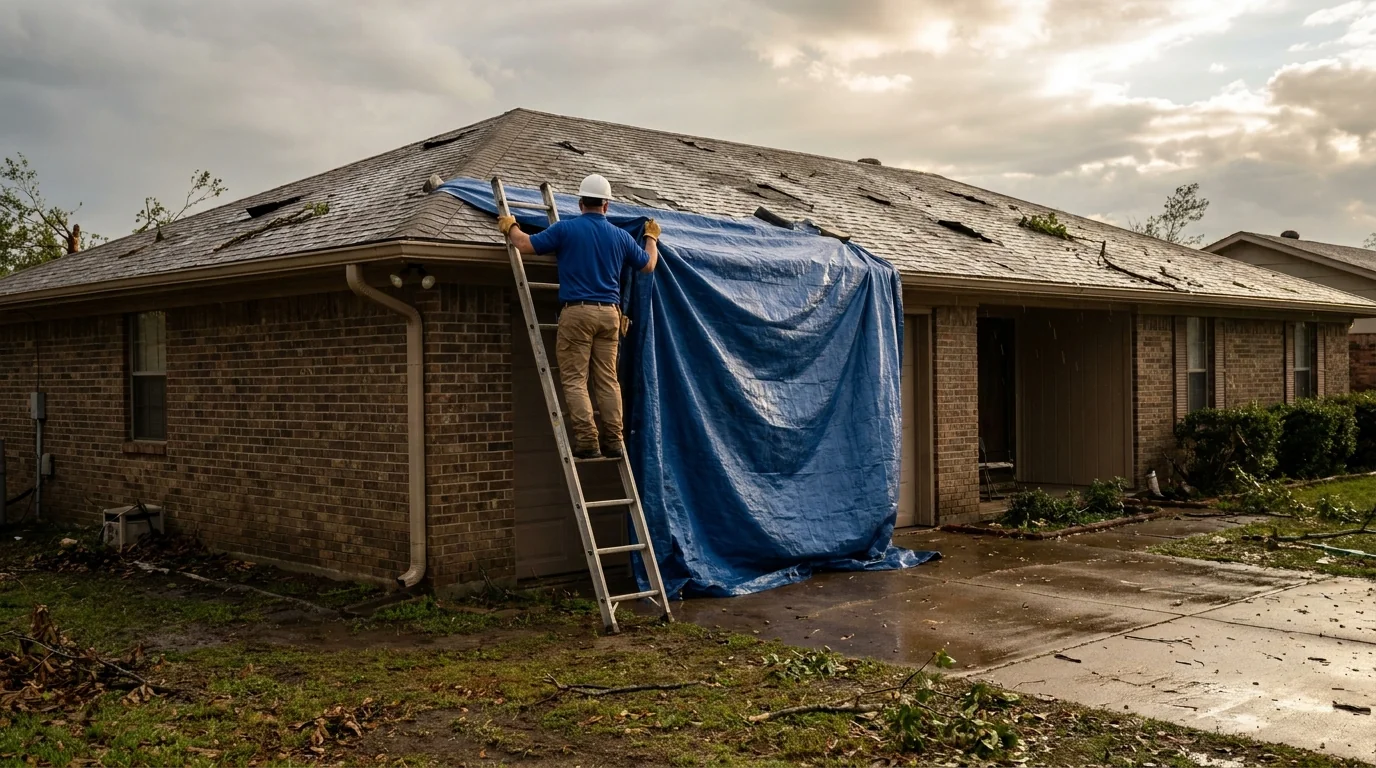
When we arrive at a storm-damaged property, the first priority is stopping ongoing water intrusion — not writing estimates. That means emergency tarping of breached roof sections, boarding compromised windows, and extracting any standing water before it migrates further.
Once the structure is stabilized, we conduct a systematic moisture survey using thermal imaging and calibrated moisture meters. Storm damage is rarely contained to the obvious impact point. Wind-driven rain infiltrates wall assemblies, insulation cavities, and subfloor systems in ways that aren’t visible to the eye. We map the full extent before any drying equipment is placed.
Drying in Grand Prairie’s climate requires attention to outdoor humidity levels, which can stay elevated for days after a major storm system passes. We adjust equipment configurations — dehumidifier grain depression targets, airflow patterns — based on actual ambient conditions rather than a fixed formula. Once structural materials reach dry standard, we move into reconstruction: roofing, framing, drywall, insulation, flooring, and finish work handled in-house so you’re not coordinating between multiple contractors.
Reaching Grand Prairie from Duncanville
Our Duncanville location puts us close to Grand Prairie’s northern neighborhoods without the highway delays that affect contractors coming from Dallas proper. Reaching Dalworth or Westchester typically means a straight shot up Duncanville Road or Belt Line Road — routes our crews run regularly. Getting to the south end of the city, around Mira Lagos or the Grand Peninsula communities near Joe Pool Lake, adds time but remains well within our service area. When multiple crews are available, we prioritize dispatch based on damage severity and structure type.
Grand Prairie Insurance Coordination
Hail and wind claims in Grand Prairie tend to cluster after the same storm events, which means insurance adjusters get backlogged quickly. We document damage thoroughly at the time of our initial assessment — photographs, moisture readings, written scope — so that when your adjuster does arrive, the record is already complete and organized. We work directly with most major carriers and can communicate with your adjuster on scope and line items, which reduces back-and-forth and keeps the project moving. Supplemental claims for damage discovered during restoration are common on older Dalworth-area homes, and we handle that documentation as part of the job.
Local Note
One pattern we’ve learned working along the Lake Ridge Parkway corridor: homes built on the expansive clay soils common in southern Grand Prairie often have foundation movement that pre-dates any storm. After a major hail or wind event, homeowners sometimes attribute new interior cracking to storm damage when it’s actually longstanding settlement that the storm simply made visible. We flag this distinction clearly in our damage documentation — it affects both the insurance scope and the correct repair sequence — because misidentifying foundation-related cracking as storm damage can create problems down the line with your carrier and with the repair itself.
If your property in Grand Prairie has taken storm damage — whether it’s a 1950s ranch in Dalworth or a two-story in Mira Lagos — call MCC Restoration and Contracting Services at (682) 772-9123. We’ll assess the damage, secure the structure, and walk you through exactly what comes next.
Storm Damage Restoration in Grand Prairie: Service Coverage
Frequently Asked Questions
How quickly can MCC reach the Mira Lagos and Grand Peninsula area after a storm?
Are older homes in Dalworth more likely to have hidden damage after a hail storm?
Grand Prairie seems to get hit by hail every spring — does that affect how fast I can get an insurance adjuster out?
What's the difference between storm damage restoration and just hiring a roofer?
Does the expansive clay soil common in southern Grand Prairie affect storm damage repairs?
Storm Damage Restoration in Grand Prairie
Our crews are based in Duncanville, TX and take on projects across Grand Prairie. Call for a free estimate.