Reconstruction Services in Duncanville
Reconstruction services in Duncanville and surrounding areas. Insurance billing accepted. Call (682) 772-9123.
What reconstruction services actually involves
After the water is extracted, the fire is out, or the storm has passed, you’re left staring at framing that’s warped, drywall that crumbled during demo, subfloor that buckled under weeks of moisture, or load-bearing walls that took structural damage no mitigation crew is licensed to touch. That gap — between a dried-out or cleaned-up shell and a livable home — is exactly where reconstruction begins. It’s not a cleanup service. It’s a licensed contracting process that returns your property to its pre-loss condition, or better, using the same sequence a new-build contractor follows: scope, permits, structure, systems, finishes.
Post-damage reconstruction in Duncanville and the surrounding DFW area typically involves a combination of structural framing repairs, sheathing and insulation replacement, drywall installation and finishing, interior trim and millwork, flooring, and the coordination of licensed trades for electrical, plumbing, and HVAC work disturbed during the loss. Depending on the extent of damage, a project may run two weeks for a single-room rebuild or several months for a whole-floor reconstruction after a significant fire or flood. The scope drives the timeline — which is why a detailed written scope of work, produced before a single nail is driven, is the foundation of every project we take on.
Our process
-
Scope of work and documentation. Before any reconstruction begins, we produce a line-item scope that documents every affected material, its dimensions, the labor required to remove and replace it, and the applicable unit cost. This document is not an estimate — it’s the same format insurance adjusters use (Xactimate-compatible line items), which means there’s no translation layer between what we’ve documented and what your carrier needs to approve. Photographs, moisture readings from the mitigation phase, and any engineer or hygienist reports are compiled here as well.
-
Permit pulling and trade coordination. Structural work, electrical panel repairs, plumbing rough-in, and HVAC duct replacement all require permits in Dallas County municipalities, including Duncanville. We pull the required permits before work starts and schedule inspections at each required phase. Skipping this step is one of the most common shortcuts taken on insurance-funded rebuilds — and one that can void a certificate of occupancy or create problems at resale.
-
Structural framing and sheathing. This is the skeleton of the rebuild. Damaged studs, joists, rafters, and sheathing panels are removed and replaced to match the original load path. On fire-damage reconstruction projects, we pay particular attention to char depth on structural members — surface char on a stud is different from a member that has lost meaningful cross-section. On water-damage reconstruction, we confirm that framing moisture content has reached acceptable levels before enclosing cavities.
-
Mechanical, electrical, and plumbing rough-in. Once the structure passes inspection, licensed subcontractors complete any MEP work inside the walls before they’re closed. This phase is sequenced deliberately — insulation and drywall cannot go in until rough-in inspections are signed off. Rushing this sequence is how hidden problems end up behind finished walls.
-
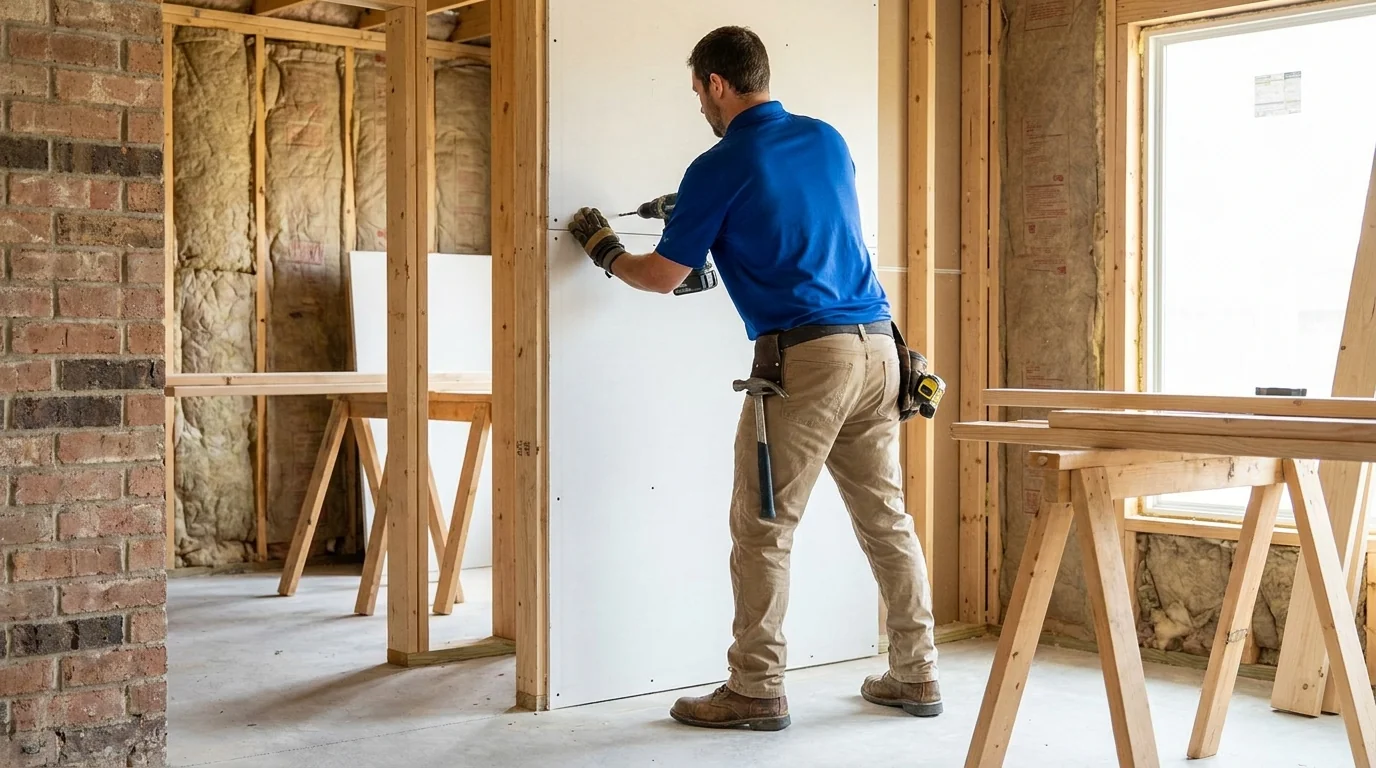
Insulation, drywall, finishing, and flooring. The final phase restores the visual and functional condition of the space: insulation to current code, drywall hung and finished to the texture that matches the rest of the home, paint, trim, doors, and flooring installed to close out the project. We match existing finishes where possible — popcorn ceilings, skip-trowel texture, hardwood species — so the rebuilt area doesn’t read as a patch.
What separates a good reconstruction response from a bad one
The most common failure point in post-disaster rebuilding isn’t the craftsmanship — it’s the scope. An incomplete scope of work means the insurance settlement is short, the contractor runs out of budget mid-project, and the homeowner is left negotiating a supplement while living in a half-finished house. Experienced reconstruction contractors write scopes that include depreciated items, code-upgrade line items (replacing materials to current IRC or local code requirements, not 1985 standards), and general conditions — the overhead costs of managing a permitted project that adjusters sometimes omit on first pass.
A second common failure: enclosing before confirming dry. On water-damage reconstruction specifically, drywall installed over framing that hasn’t reached equilibrium moisture content will grow mold inside the wall cavity within weeks. We verify moisture readings before any cavity is closed — not as a formality, but because the cost of re-opening a finished wall is always higher than the cost of waiting two more days.
Insurance adjusters also look for matching. Texas case law and most homeowner policies include provisions for matching undamaged materials to repaired areas when a reasonable match isn’t available. Knowing when to invoke that provision — and how to document it — is the difference between a complete repair and a patchwork result.
Seasonal and regional considerations
North Texas weather creates a specific reconstruction calendar. Hail and wind events peak in spring, meaning roofing and exterior reconstruction demand surges between March and June. Scheduling permits, inspections, and material delivery during that window requires lead time. Summers in Duncanville push heat indices well above 100°F, which affects adhesive cure times, paint application windows, and the comfort and safety of crews working in unconditioned spaces. Winter ice storms — the kind that knocked out power across the region in February 2021 — can generate simultaneous pipe-burst claims across entire zip codes, compressing the availability of licensed plumbers and drywall crews. Planning for those windows, not just reacting to them, keeps projects on schedule.
Service area
MCC Restoration and Contracting Services is based in Duncanville, TX, and handles reconstruction projects throughout the southwestern DFW corridor — including Cedar Hill, DeSoto, Mansfield, Grand Prairie, Lancaster, Midlothian, and Waxahachie. City-specific service pages link back here for full process detail.
If you’re standing in a gutted room trying to figure out what comes next, call (682) 772-9123 to request a reconstruction scope of work. We’ll document the damage, produce a line-item scope, and walk you through the rebuild timeline before any work begins.
Frequently Asked Questions
What is a scope of work, and why does it matter for my insurance claim?
Do I need permits for reconstruction work after a covered loss?
How do you handle matching existing finishes — flooring, texture, trim — in the rebuilt area?
How do you know when framing is dry enough to close the walls after water damage?
What does fire damage reconstruction involve beyond replacing drywall?
Looking for the best reconstruction services company in Duncanville?
MCC Restoration and Contracting Services provides reconstruction services in Duncanville, TX and the surrounding area. Call (682) 772-9123 for a free estimate.
Need Reconstruction Services now?
We respond fast across Duncanville and surrounding TX cities.