Reconstruction Services in Duncanville
Reconstruction services in Duncanville, TX. Insurance billing accepted. Call (682) 772-9123.
Our crews are headquartered right here in Duncanville and take on projects across the surrounding area.
When Blackland Prairie clay shifts beneath a 1960s brick ranch in Swan Ridge or Cedar Ridge, the damage rarely stops at a cracked slab. Pipes fail, framing settles, and what started as a plumbing loss or a hail-punched roof can cascade into a full structural rebuild before a homeowner realizes how far the damage has spread. MCC Restoration and Contracting Services is headquartered right here in Duncanville — not dispatched from a regional hub — and that proximity shapes how quickly a rebuild assessment can begin and how well the crew understands what these properties actually need.
Why Duncanville Properties Face Recurring Reconstruction Needs
The housing stock along the Wheatland Road corridor and through the Main Street district is predominantly 1950s–1980s brick construction built on expansive clay soil. That clay swells in wet seasons and contracts in drought, and the cycle repeats every year. Over decades, slabs crack, supply lines shear at joints, and pier-and-beam foundations rack out of level. When a slab leak goes undetected for weeks — which happens often in finished-floor homes where the first sign is a warm spot underfoot — the subfloor, lower wall cavities, and even load-bearing elements can be compromised by the time the water is shut off.
North Texas hail seasons compound the problem. A spring storm that punches through roofing above an older attic with minimal insulation can let water migrate into wall assemblies for days before interior staining appears. Then the February 2021 freeze event demonstrated citywide what happens when pipes burst simultaneously in homes that were never insulated for sustained sub-teens temperatures: repair backlogs stretched for months, and properties that didn’t get fully dried became mold jobs by summer. Reconstruction in Duncanville means working within that history.
Our Reconstruction Process in Duncanville
Every rebuild starts with a scope-of-loss assessment that documents what failed structurally, not just what looks damaged on the surface. For a typical post-water or post-fire loss in a 75116 ZIP code home, that means probing wall cavities for hidden moisture, checking slab integrity where applicable, and identifying whether any load-bearing elements were compromised before a single piece of new material is ordered.
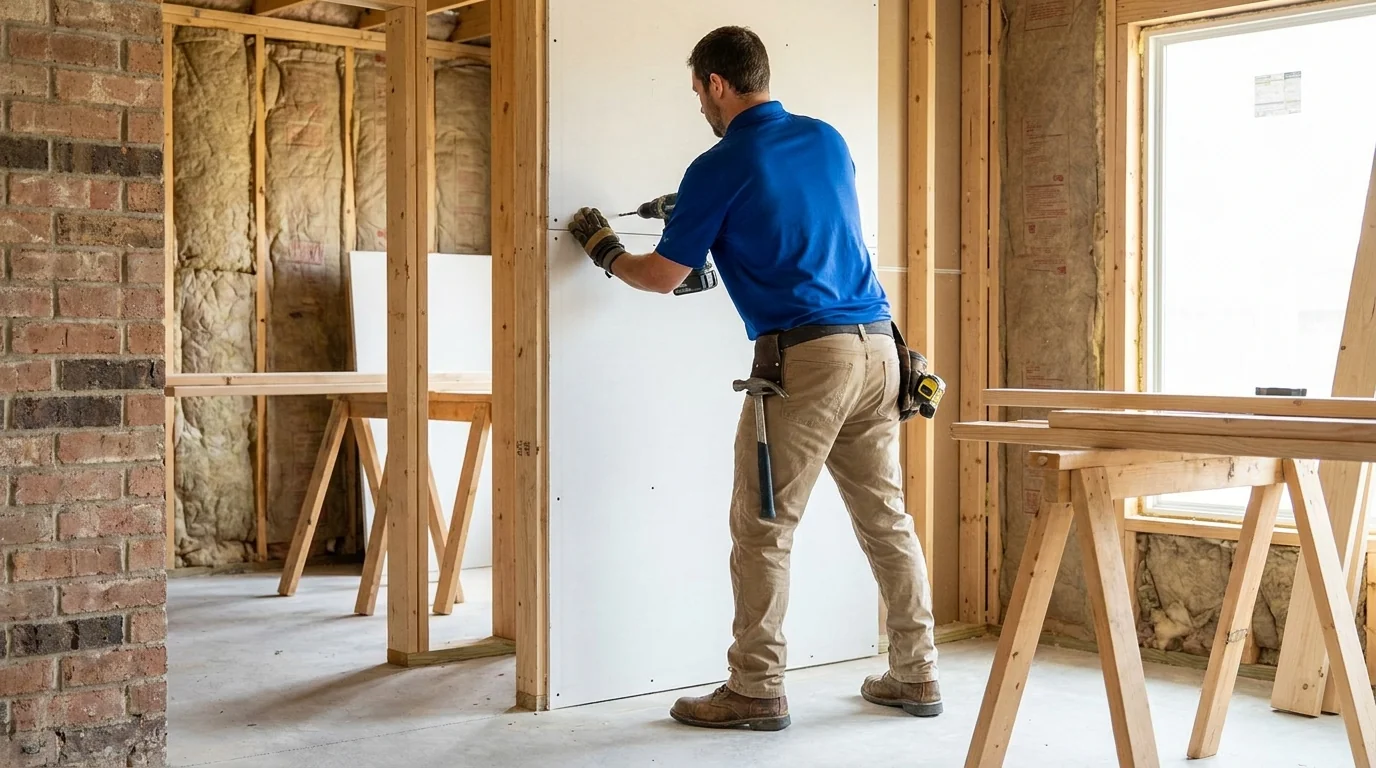
From there, the process moves through demolition of unsalvageable materials, framing repair or replacement, rough mechanical (plumbing, electrical, HVAC) coordination, insulation, drywall, finish work, and final inspection. On older brick ranches, matching exterior brick veneer is a detail that matters — mismatched brick is immediately visible and affects both resale value and code compliance on permitted work. The team sources regional brick to get close matches rather than leaving a patchwork finish.
Permits are pulled through the City of Duncanville’s Building Inspections department before structural work begins. This is non-negotiable on permitted scopes, and it protects the property owner’s insurance claim documentation as well.
Duncanville Insurance Coordination for Reconstruction Claims
Post-disaster reconstruction claims — especially those involving both a primary cause (burst pipe, fire, hail) and secondary damage (mold, structural movement) — are among the more complex residential insurance files. Adjusters often scope only the visible damage on a first inspection, and it falls to the contractor to document concealed losses with photographs, moisture readings, and written scope narratives before demolition begins.
MCC works directly with homeowners and their adjusters to provide that documentation. Supplement requests — for items missed in the initial estimate or discovered during demo — are a normal part of the process on older Duncanville homes where hidden damage is common. Having a contractor who is local and can meet an adjuster on-site on short notice makes a measurable difference in how those supplements are resolved.
Local Note
One thing that comes up repeatedly on reconstruction jobs near the Duncanville Fieldhouse area and along older subdivisions off Camp Wisdom Road: the original plumbing in many 1960s–1970s homes runs under the slab in galvanized or early copper that has never been replaced. When a slab leak triggers a reconstruction scope, it’s worth having a plumber camera the entire under-slab run before closing up the concrete — not just the failed section. Patching one breach and leaving corroded pipe in place means the next leak is likely within a few years. It’s a conversation worth having before the slab is poured back.
When a property in Duncanville — whether a family home near Armstrong Park or a commercial building in the Main Street district — has been through fire, water, or storm damage, the path back to a safe, permitted, livable structure requires a contractor who knows the local building stock, the permit process, and what insurance documentation actually needs to look like. Call MCC Restoration and Contracting Services at (682) 772-9123 to schedule a reconstruction assessment.
Reconstruction Services in Duncanville: Service Coverage
Frequently Asked Questions
How does Duncanville's Blackland Prairie clay soil affect a post-water-damage reconstruction timeline?
Do homes in the 75116 ZIP code face any permit or inspection requirements that affect reconstruction timelines?
What's typical for fire damage reconstruction in Duncanville's older brick ranch homes?
Can MCC help document a reconstruction claim that started with February 2021 freeze damage that was never fully repaired?
How long does a full structural reconstruction typically take for a mid-sized Duncanville home after a major water or fire loss?
Reconstruction Services in Duncanville
Our crews are based in Duncanville, TX and take on projects across Duncanville. Call for a free estimate.