Reconstruction Services in Dallas
Reconstruction services in Dallas, TX. Insurance billing accepted. Call (682) 772-9123.
Our crews are dispatched from our Duncanville, TX headquarters and respond quickly to projects across Dallas.
When a tornado skips across southern Dallas or a spring supercell drops golf-ball hail on a strip of Oak Cliff bungalows, the damage visible from the street is only part of the story. Beneath the broken rafters and blown-out windows, you often find that the real reconstruction challenge is the building itself — 1920s–1950s framing, cast-iron drain stacks, and galvanized supply lines running through foundations that shift with Dallas’s notoriously expansive black-clay soil. MCC Restoration and Contracting Services handles the full rebuild from that point forward, coordinating structural, mechanical, and finish work so property owners and managers aren’t left managing a dozen separate contractors.
Why Dallas Properties Present Unique Reconstruction Challenges
Dallas’s building stock isn’t uniform, and neither are its failure modes. In Kessler Park and the surrounding historic corridors, homes built before World War II frequently used balloon-frame construction — wall studs that run continuously from sill to roofline without the fire-blocking and structural breaks that modern platform framing requires. When fire or water compromises even one section of that framing, the repair scope can extend further than the visible damage suggests, and it needs to be assessed carefully before any finish work begins.
Further south in Red Bird and Mountain Creek, the housing stock shifts to 1970s–1990s tract construction — engineered trusses, OSB sheathing, and HVAC systems tucked into unconditioned attic space. Those trusses perform well until hail or wind lifts the decking, at which point water intrusion into the attic cavity can saturate insulation and compromise truss plates before anyone notices interior ceiling staining. The reconstruction scope on those jobs often includes truss repair or replacement, full re-deck, and mechanical re-routing that the original insurance estimate didn’t capture.
The clay soil beneath both neighborhoods adds a layer of complexity that contractors unfamiliar with North Texas sometimes underestimate. Differential foundation movement can crack stem walls, shift door frames out of plumb, and open gaps in brick veneer — all of which need to be addressed as part of a structurally sound rebuild rather than patched cosmetically.
Our Reconstruction Process in Dallas
Every reconstruction project starts with a detailed scope document — not a rough estimate, but a line-item breakdown of structural repairs, systems work, and finish materials that can be submitted directly to your insurance adjuster. We photograph and document existing conditions before anything is touched, which protects both the property owner and the claim.
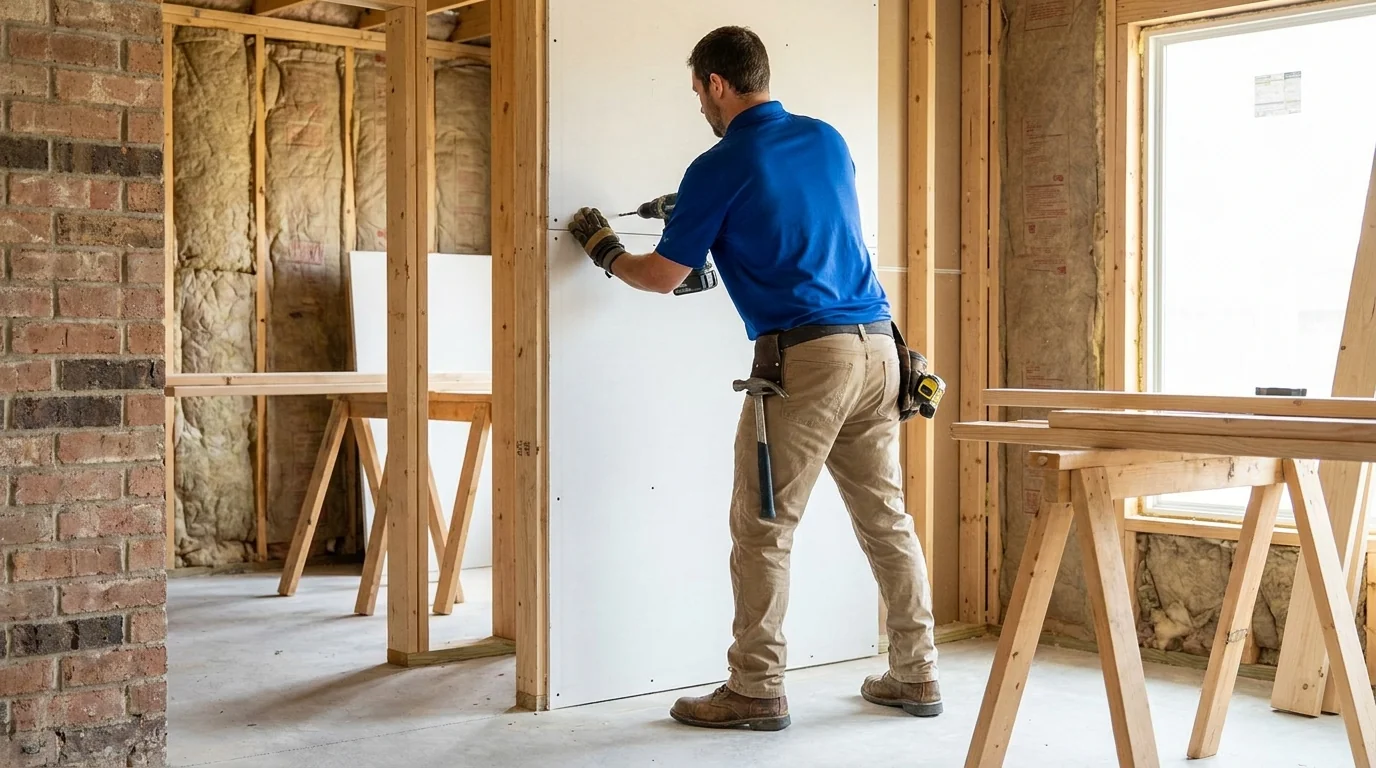
Structural work comes first: framing repairs, sheathing replacement, roof decking, and any foundation-adjacent masonry that was displaced. Once the building envelope is secure and inspected, mechanical trades follow — electrical, plumbing, and HVAC are sequenced to avoid rework. Finish work — drywall, insulation, flooring, paint, millwork — closes out the project.
For commercial properties along the I-35E and Highway 67 corridors, where multifamily buildings and mixed-use strip centers are common, we coordinate phased reconstruction to keep uninvolved units occupied and minimize lost rental income during the rebuild. That sequencing matters to property managers in ways that a purely residential contractor may not anticipate.
Dallas Insurance and Permit Coordination
Dallas requires building permits for structural reconstruction, and the City of Dallas Development Services Department inspects at multiple stages — framing, rough mechanical, and final. We pull permits, schedule inspections, and keep the inspection record organized so there are no surprises at closing or during a future property sale.
On the insurance side, we work directly with adjusters and provide the documentation format — Xactimate line items, photo logs, and supplement requests — that most carriers expect. Properties in ZIP codes like 75211 and 75232 that have filed prior wind or hail claims sometimes face additional adjuster scrutiny; having a complete, organized file from the start shortens the back-and-forth considerably.
For commercial clients, we’re also familiar with the additional insured and certificate-of-insurance requirements that property management companies and lenders typically require before reconstruction begins.
Local Note
One thing that catches out-of-area contractors working in Kessler Park and the older Oak Cliff neighborhoods: the original interior trim profiles — door casings, base moldings, window surrounds — were milled to dimensions that don’t match anything stocked at a modern lumber yard. When reconstruction requires replacing even a partial run of that trim, sourcing matched profiles from a millwork shop adds lead time that needs to be built into the project schedule upfront. We account for that on the front end rather than discovering it mid-project, which keeps the timeline realistic and avoids the mismatched finish work that can complicate historic-district approvals in some parts of the neighborhood.
If your property in Dallas has been damaged by fire, storm, or water and you’re ready to move from emergency stabilization into full rebuild, call MCC Restoration and Contracting Services at (682) 772-9123. We’ll walk the site, document the scope, and give you a clear picture of what the reconstruction will involve — no vague estimates, no surprises mid-project.
Reconstruction Services in Dallas: Service Coverage
Frequently Asked Questions
How does Dallas's black-clay soil affect the reconstruction scope after foundation-related damage?
Are historic homes in Kessler Park subject to additional approval requirements during reconstruction?
What does post-storm reconstruction typically involve for 1970s–1990s tract homes in Red Bird or Mountain Creek?
How do you handle phased reconstruction for multifamily properties along the I-35E corridor in Dallas?
What permits are required for structural reconstruction in Dallas, and do you manage that process?
Reconstruction Services in Dallas
Our crews are based in Duncanville, TX and take on projects across Dallas. Call for a free estimate.