Fire Damage Restoration in Duncanville
Fire damage restoration in Duncanville, TX. Insurance billing accepted. Call (682) 772-9123.
Our crews are headquartered right here in Duncanville and take on projects across the surrounding area.
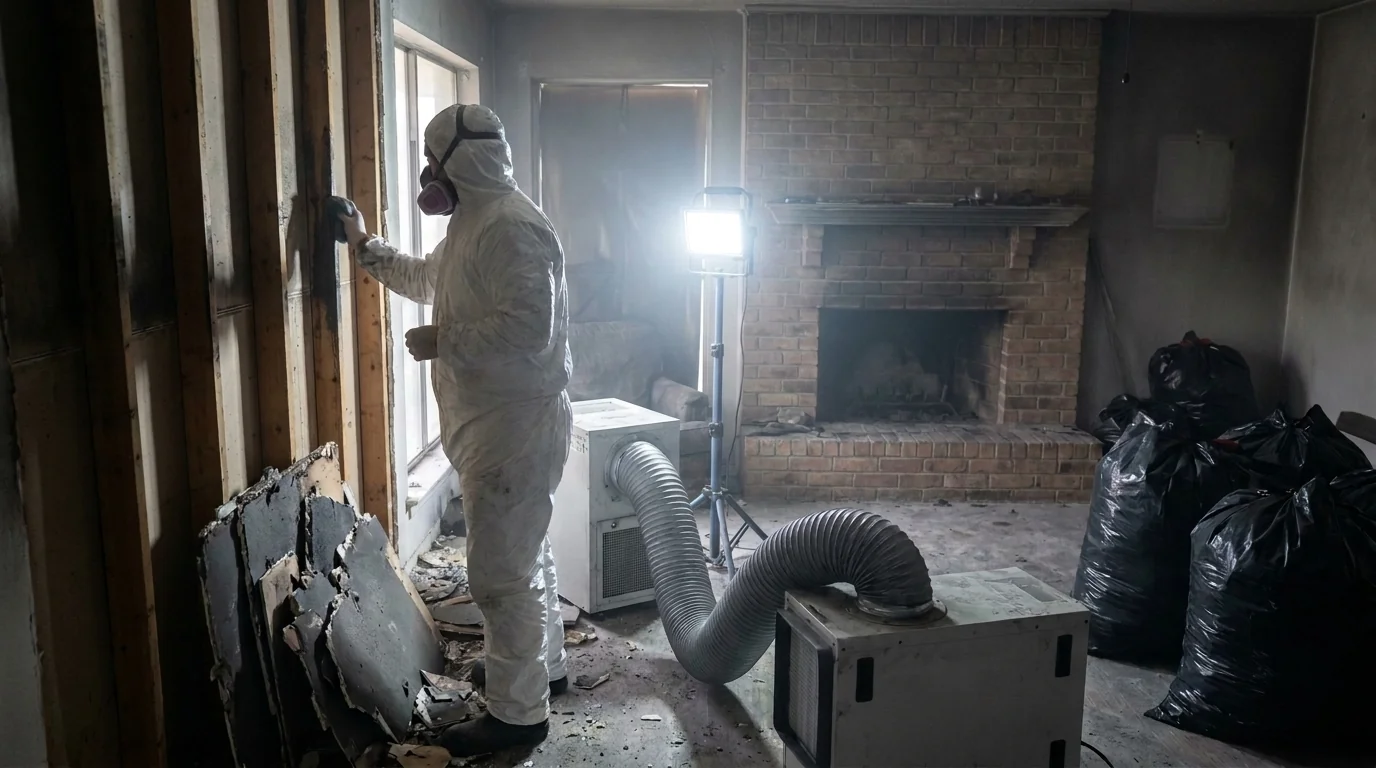
When fire breaks out in one of Duncanville’s 1960s or 1970s brick ranch homes — the kind that line the streets near Swan Ridge and Cedar Ridge — the damage pattern is different from what you’d see in newer construction. Older wood framing and original drywall absorb smoke deeply, and the tight floor plans common to that era let soot migrate into every room through the HVAC system before the fire department has even cleared the scene. MCC Restoration and Contracting Services is based right here in Duncanville, and we know exactly what post-fire recovery looks like in this housing stock.
Why Duncanville Homes Face Distinct Fire Damage Challenges
Duncanville’s residential core is built largely on Blackland Prairie clay, and that geology shapes more than just foundation behavior. The same seasonal soil movement that cracks slabs and supply lines also stresses gas lines running under and alongside older homes — a slow gas leak near an ignition source is a real risk in this area, not a hypothetical one. Add in the fact that many homes in the 75116 ZIP code were built before modern fire-blocking requirements, and you have floor cavities and wall chases that act like chimneys during a structural fire, pulling smoke and heat deeper into the building than the visible burn area suggests.
North Texas hail seasons also play an indirect role. A compromised roof from a spring storm that went unrepaired is a faster-spreading fire risk — dry attic insulation and exposed sheathing ignite quickly. Homeowners near the Wheatland Road corridor who delayed roof repairs after a hail event have learned this the hard way.
Our Fire Damage Restoration Process in Duncanville
The first thing we do on any fire job is a room-by-room scope before any cleaning starts. Soot isn’t uniform — protein residues from a kitchen fire behave differently than the wet smoke residue left by a slow-burning upholstered couch fire, and the wrong cleaning chemistry makes permanent staining worse. We identify residue types, document every affected surface with photos, and produce a written scope that your insurance adjuster can work from directly.
Structural assessment comes next. In Duncanville’s older ranch homes, we pay close attention to load-bearing walls that may have experienced prolonged heat exposure — wood can lose structural integrity at temperatures well below what causes visible charring. We coordinate with licensed structural engineers when the fire involved any wall or ceiling framing for more than a few minutes.
Odor elimination is where many contractors cut corners, and it’s the step homeowners notice most. We use thermal fogging and hydroxyl generation to neutralize smoke odor molecules embedded in porous materials — not just surface sprays that mask the smell for a few weeks. Ductwork cleaning is included in our scope on every job, because soot-coated HVAC systems will re-contaminate a freshly restored home the first time the system runs.
Duncanville Insurance Coordination
Most Duncanville homeowners carry standard HO-3 policies, and fire is a named peril — meaning coverage is typically straightforward once the claim is filed. Where things get complicated is in the documentation. Insurance adjusters often underestimate the scope of smoke migration in older homes because they’re working from visible damage. We photograph and document hidden soot in wall cavities, attic spaces, and HVAC systems so the adjuster’s estimate reflects the actual restoration cost, not just what’s obvious at first walk-through.
We bill carriers directly and communicate with adjusters throughout the job. If a supplemental claim is needed because hidden damage is found during demolition — common in pre-1980 construction — we handle that process so you’re not navigating it alone.
Local Note
One thing specific to Duncanville’s older brick ranches: the original interior walls in many homes built between 1955 and 1975 used a thin plaster-over-drywall hybrid finish rather than standard modern drywall. This material holds smoke odor compounds differently — it’s more porous than modern drywall but less absorbent than true plaster. Standard odor treatments calibrated for modern construction can underperform on these surfaces. We adjust dwell times and application rates accordingly, and we test surfaces before signing off on odor clearance rather than relying on a fixed treatment schedule.
If you’re not sure what wall finish your home has, a quick look at the edges around an outlet cover will tell you — plaster or hybrid walls show a noticeably thicker cross-section than standard half-inch drywall.
If your Duncanville home or commercial property has sustained fire or smoke damage, call MCC Restoration and Contracting Services at (682) 772-9123. We’re local, we know this city’s housing stock, and we’ll give you a straight assessment of what the restoration actually involves — no inflated scopes, no surprises.
Fire Damage Restoration in Duncanville: Service Coverage
Frequently Asked Questions
How quickly can MCC Restoration reach homes in the Swan Ridge and Cedar Ridge areas of Duncanville?
Are the older brick ranch homes common in Duncanville's 75116 ZIP code harder to restore after a fire?
Does Duncanville's Blackland Prairie clay soil affect fire damage restoration work?
What does the smoke restoration process actually involve for a kitchen fire in a Duncanville home?
How does MCC handle insurance documentation for fire claims on Duncanville properties?
Fire Damage Restoration in Duncanville
Our crews are based in Duncanville, TX and take on projects across Duncanville. Call for a free estimate.