Storm Damage Restoration in Dallas
Storm damage restoration in Dallas, TX. Insurance billing accepted. Call (682) 772-9123.
Our crews are dispatched from our Duncanville, TX headquarters and respond quickly to projects across Dallas.
When a spring supercell tears through southern Dallas, the damage it leaves behind isn’t generic — it’s shaped by the specific housing stock, soil, and geography of this part of North Texas. Kessler Park’s 1930s and 1940s homes sit on expansive clay that shifts dramatically after a heavy rain event, meaning a storm that drops two inches in forty minutes doesn’t just strip shingles; it can crack foundations, back up cast-iron drain lines, and push water into crawl spaces that haven’t seen a flashlight in decades. MCC Restoration and Contracting Services operates out of Duncanville, putting the most storm-active corridors of Dallas within a short drive when you need help fast.
Why Dallas Properties See Repeated Storm Damage
Dallas sits squarely in Tornado Alley’s southern reach, and the spring supercell season — typically March through June — brings rotating storms capable of producing large hail, straight-line winds above 70 mph, and occasional tornadoes. The Trinity River Greenbelt and the creek-adjacent streets that feed into it are especially vulnerable to flash flooding; a storm that barely registers in Uptown can drop enough water on the Red Bird and Mountain Creek neighborhoods to overwhelm storm drains and send water sheeting across driveways and into garages within minutes.
The housing stock adds another layer of complexity. Oak Cliff’s older neighborhoods, particularly around Kessler Park, contain homes built before modern building codes required hurricane straps, engineered roof sheathing, or impact-rated windows. A storm that causes cosmetic damage to a 2005 tract home in Mountain Creek can cause structural damage to a 1940s bungalow a few miles north. The 1970s–1990s construction in the 75237 and 75232 ZIP codes tends to use wood-frame construction with composition shingles that have often already cycled through one or two insurance claims — meaning the underlying decking may be softer than it looks from the street.
Our Storm Damage Restoration Process in Dallas
The first step after any storm loss is a thorough exterior and interior assessment before a single piece of debris is moved. Hail impact patterns, wind-driven rain intrusion points, and tree strike damage each require a different remediation sequence, and documenting the full scope before work begins is essential for insurance purposes.
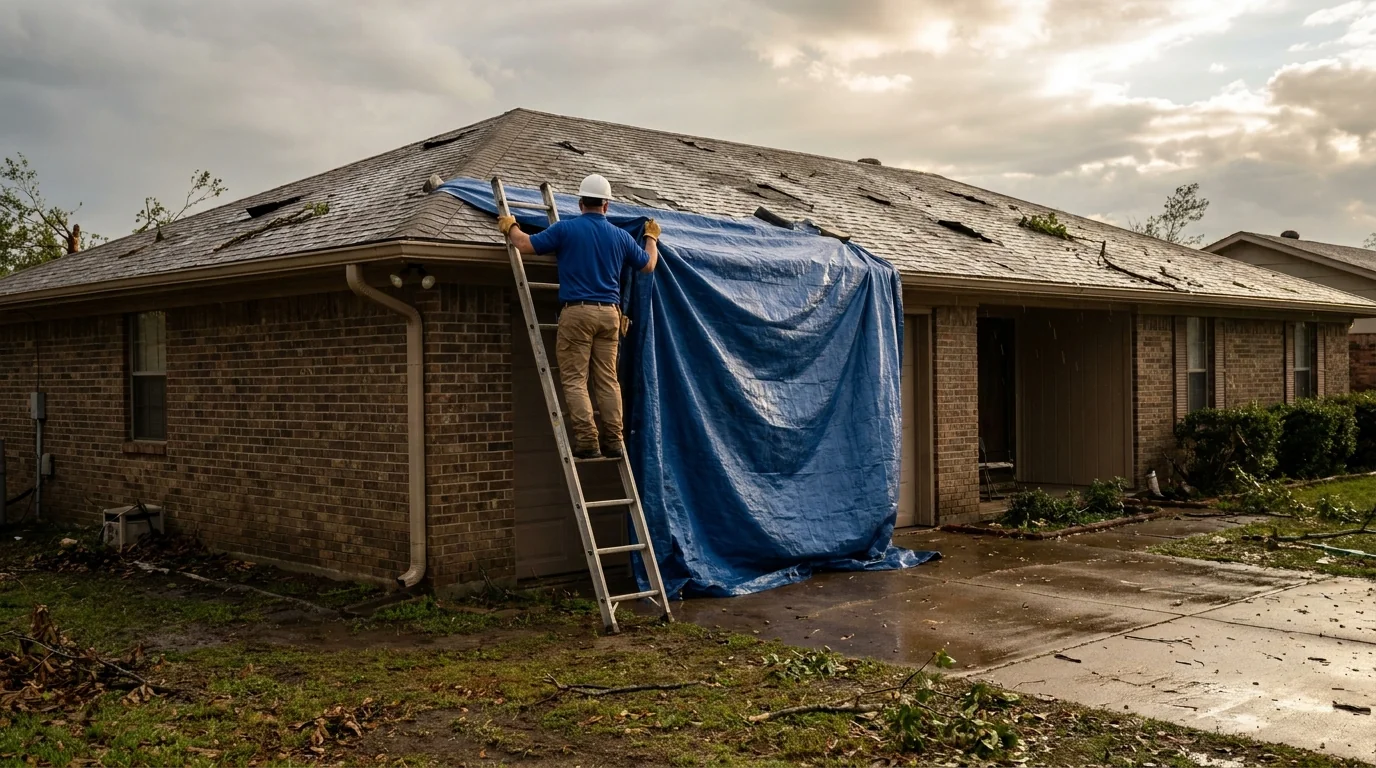
For roof and structural damage, we tarp and board exposed areas to stop secondary water intrusion — Dallas summer heat means a wet attic can begin growing mold within 48 to 72 hours if moisture isn’t addressed quickly. Water that has entered through a compromised roof or broken window gets extracted and the affected materials dried using commercial-grade dehumidifiers and air movers calibrated to the actual square footage and material types involved.
Tree and debris removal is coordinated early in the process, particularly in neighborhoods like Oak Cliff where mature post oaks and cedar elms are common and can drop large limbs onto roofs, fences, and HVAC equipment. Once the structure is stabilized and dry, reconstruction — framing, roofing, siding, drywall, and finish work — is handled in-house, so you’re not managing a separate contractor for every trade.
Reaching Dallas from Duncanville
MCC’s Duncanville base sits directly south of Dallas along Highway 67, which runs straight into the heart of Oak Cliff and connects quickly to I-35E for access to the Bishop Arts District, Red Bird, and the Kiest Park area. The drive to most of the 75211 and 75224 ZIP codes is short under normal traffic conditions, and the team is familiar with the neighborhood street patterns that GPS sometimes routes around inefficiently — including the one-way blocks near the Dallas Zoo and the rail crossings along Zang Boulevard that can add time if you don’t know the area.
For commercial properties along the I-35E and Highway 67 corridors — multifamily complexes, strip retail, and light industrial — the same proximity applies. Storm losses in dense multifamily buildings require coordinated unit-by-unit assessment, and having a crew that has worked those corridors before makes the logistics faster.
Dallas Insurance & HOA Coordination
Storm damage claims in Dallas typically involve wind and hail coverage under standard homeowners’ policies, but the documentation requirements vary by carrier. We photograph all damage before any mitigation work begins, generate a detailed scope of loss, and work directly with adjusters to make sure the claim reflects the full extent of damage — not just what’s visible from the ground.
In historic sections of Oak Cliff, including parts of Kessler Park that fall under Dallas Landmark Commission oversight, exterior repairs may require materials that match the original construction. We flag those situations early so the insurance scope accounts for the correct materials rather than standard replacement costs that won’t pass a historic review.
Local Note
One thing that catches homeowners off guard in the Kessler Park and Oak Cliff historic corridors: when storm damage requires roof or siding replacement on a Landmark-designated property, the City of Dallas requires a Certificate of Appropriateness before exterior work begins. That review process can add one to two weeks to a project timeline. We’ve learned to submit the documentation package to the Landmark Commission at the same time we’re completing the drying and interior work, so the exterior reconstruction permit is ready to go the moment the interior is stabilized — rather than sitting idle waiting on paperwork after the inside is already done.
If your home in the 75211 or 75224 ZIP code was built before 1950, it’s worth asking your contractor whether the address carries any historic overlay designation before signing a repair contract. It affects both the permitting timeline and what materials are acceptable.
When a storm rolls through Dallas and leaves your property exposed, the window for preventing secondary damage is short. Call MCC Restoration and Contracting Services at (682) 772-9123 to schedule an assessment — the sooner the structure is stabilized and dried, the smaller the total scope of repairs tends to be.
Storm Damage Restoration in Dallas: Service Coverage
Frequently Asked Questions
How quickly can MCC reach the Oak Cliff and Kessler Park area after a storm?
Are older homes in Kessler Park more vulnerable to storm damage than newer construction in Red Bird or Mountain Creek?
Does the Dallas Landmark Commission designation affect storm damage repairs in historic Oak Cliff neighborhoods?
What does the storm damage assessment process look like, and how does it affect my insurance claim?
How fast can mold become a problem after storm-related water intrusion in a Dallas home?
Storm Damage Restoration in Dallas
Our crews are based in Duncanville, TX and take on projects across Dallas. Call for a free estimate.