Storm Damage Restoration in Cedar Hill
Storm damage restoration in Cedar Hill, TX. Insurance billing accepted. Call (682) 772-9123.
Our crews are dispatched from our Duncanville, TX headquarters and respond quickly to projects across Cedar Hill.
Cedar Hill sits at one of the highest elevations in the Dallas–Fort Worth Metroplex, perched along the White Rock Escarpment where open sky and ridge-top exposure mean storms hit harder and linger longer than they do in the flatlands below. When a severe line of thunderstorms rolls through, properties from the Lake Ridge custom homes on the western slopes to the older blocks near Cedar Hill’s historic downtown absorb wind gusts, hail, and driving rain with little natural shelter. MCC Restoration and Contracting Services is based in nearby Duncanville, and storm damage calls from the 75104 and 75106 ZIP codes are a familiar part of what we do.
Why Cedar Hill Properties See Elevated Storm Damage
Elevation is the first factor. The escarpment that makes Cedar Hill one of the highest points in North Texas also funnels and accelerates wind — what registers as a 60-mph gust at DFW Airport can translate to something noticeably stronger across the ridge. Roofs take the brunt of that, particularly the hip and gable roofs common on the 2000s-era custom builds in Lake Ridge, where large footprints and complex rooflines create more surface area for hail to find a soft spot in shingles or flashing.
The second factor is drainage. The clay-heavy soils of the escarpment shed water quickly during heavy rain rather than absorbing it, which means runoff moves fast down slopes and toward foundations. Homes in the Bear Creek area and on Lake Ridge’s tiered lots can see water intrusion at foundation seams, window wells, and garage slabs within minutes of a storm’s peak — not hours. That speed matters for how quickly remediation needs to start to prevent secondary moisture damage.
Older structures near Cedar Hill’s historic downtown bring a different set of vulnerabilities: aging roof decking, original single-pane windows, and in some cases masonry that has absorbed decades of weather cycles. A severe hail event that leaves newer homes with cosmetic damage can open genuine structural gaps in a 1960s or 1970s brick veneer home.
Our Storm Damage Restoration Process in Cedar Hill
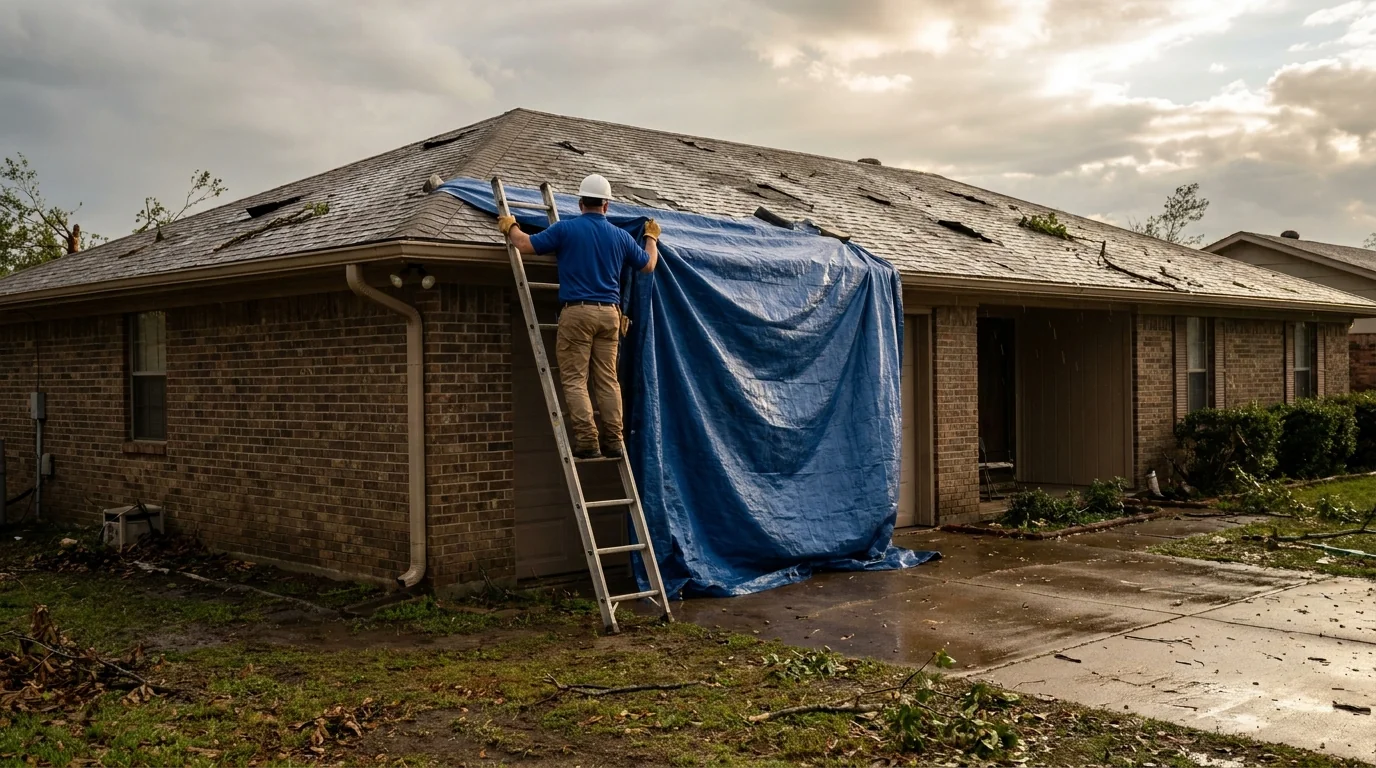
When we arrive on-site, the first priority is a full exterior and interior assessment before any debris moves. Roof penetrations, soffit damage, and broken windows need to be documented and temporarily sealed — typically with heavy-gauge tarps and board-up materials — before rain can drive further water into the structure. We photograph and measure every affected area, which becomes the foundation of the insurance claim file.
Once the structure is stabilized, interior work begins. If wind-driven rain or a roof breach has allowed water into attic insulation, wall cavities, or ceilings, we treat it as a water damage event running parallel to the storm damage scope. Moisture readings guide where materials stay and where they need to come out. Wet insulation in an attic, for example, holds moisture against roof sheathing long after the storm passes — leaving it in place accelerates the conditions for wood rot and mold colonization, which in North Texas heat can begin within 24 to 48 hours.
Tree impact is common after severe storms near Cedar Hill State Park and the wooded lots throughout the area. When a tree or large limb breaches a roof or wall, the structural assessment expands to include framing integrity before any cosmetic repair begins.
Reaching Cedar Hill from Duncanville
MCC’s home base in Duncanville puts Cedar Hill well within our regular service area — the two cities share a border, and our crews travel US-67 and Beltline Road routinely. High Pointe and Lake Ridge are typically reachable without navigating significant traffic bottlenecks, though post-storm conditions with downed limbs or flooded low-water crossings can affect routing. We’ll communicate estimated arrival honestly rather than give a number that weather won’t cooperate with.
Cedar Hill Insurance Coordination
Most storm damage claims in Cedar Hill run through homeowners’ policies under wind and hail coverage, and the documentation process matters more than most homeowners realize at the outset. Carriers want itemized scope, not a general description. We provide line-item damage reports, moisture readings with timestamps, and photos organized by location in the structure — the format adjusters expect. We work directly with your adjuster and can be on-site during the inspection if scheduling allows. HOA communities, particularly in master-planned sections of Lake Ridge, may also have architectural review requirements for exterior repairs; we factor those into the scope before materials are ordered.
Local Note
One thing that catches homeowners off guard in the Lake Ridge area specifically: the sloped lots that give those properties their views also mean that storm debris — shingle granules, broken fascia, displaced gravel from rooftop HVAC pads — migrates downhill and collects against lower foundation walls or in window wells. It looks like cosmetic cleanup, but compacted debris against a foundation on clay soil traps moisture in exactly the wrong place. We clear and inspect those accumulation points as part of every storm assessment on sloped properties, not as an add-on.
If a recent storm has left your Cedar Hill home with roof damage, water intrusion, or structural concerns, call MCC Restoration and Contracting Services at (682) 772-9123. We’ll assess the full scope, handle the documentation, and get the work moving before secondary damage compounds the original loss.
Storm Damage Restoration in Cedar Hill: Service Coverage
Frequently Asked Questions
Are Lake Ridge homes more vulnerable to hail damage than other Cedar Hill neighborhoods?
How quickly can MCC reach Cedar Hill from Duncanville after a storm?
Does the clay soil in Cedar Hill affect how quickly storm-related water intrusion becomes a serious problem?
What does the storm damage restoration process look like for an older home near Cedar Hill's historic downtown?
Will my insurance adjuster accept the documentation MCC provides for a Cedar Hill storm claim?
Storm Damage Restoration in Cedar Hill
Our crews are based in Duncanville, TX and take on projects across Cedar Hill. Call for a free estimate.