Storm Damage Restoration in Duncanville
Storm damage restoration in Duncanville, TX. Insurance billing accepted. Call (682) 772-9123.
Our crews are headquartered right here in Duncanville and take on projects across the surrounding area.
Spring in Duncanville arrives with a familiar rhythm: warming temperatures, greening lawns along the Wheatland Road corridor — and the first round of severe thunderstorms rolling in off the Blackland Prairie. When a hail-driven storm tears through the 75116 zip code, it rarely stops at a dented gutter. On the 1960s and 1970s brick ranch homes that make up most of Duncanville’s housing stock, a compromised roof deck can funnel water into attic insulation, wall cavities, and the clay-heavy soil beneath the slab before a homeowner has finished assessing the damage from the driveway. MCC Restoration and Contracting Services is based here in Duncanville, and storm damage restoration is work we do in this specific community — not a distant service territory we drive into after a bigger market is handled.
Why Duncanville Properties Are Particularly Vulnerable After Severe Weather
North Texas sits squarely in what meteorologists call the southern hail alley, and Dallas County properties absorb some of the region’s highest annual hail frequency. But Duncanville has a compounding factor that homeowners in newer suburbs don’t face: the Blackland Prairie clay underneath virtually every slab in town. This expansive soil swells with moisture and shrinks in drought, and it moves constantly. A storm that dumps two inches of rain in forty minutes saturates that clay rapidly, accelerating the seasonal soil movement that already stresses foundations, supply lines, and the mortar joints in older brick veneer.
The practical result is that storm damage here often involves more than the obvious: a cracked ridge cap leads to a wet attic, a wet attic leads to insulation that holds moisture against the roof deck for weeks, and by the time the humidity of a Duncanville summer arrives, mold colonization is well underway. Homes near Cedar Ridge and in the Swan Ridge neighborhood — many built between 1955 and 1985 — have roof-to-wall transitions and chimney flashings that were installed with materials that are now decades past their service life. A storm that a newer home shrugs off can open multiple water intrusion points on these properties simultaneously.
Our Storm Damage Restoration Process in Duncanville
When we arrive at a storm-damaged property, the first priority is a systematic exterior and interior assessment before any material is removed or dried. On Duncanville’s older brick ranches, that means checking not just the obvious roof punctures but the fascia boards, soffit vents, and the mortar joints along the roofline — all common secondary entry points after a hail or wind event.
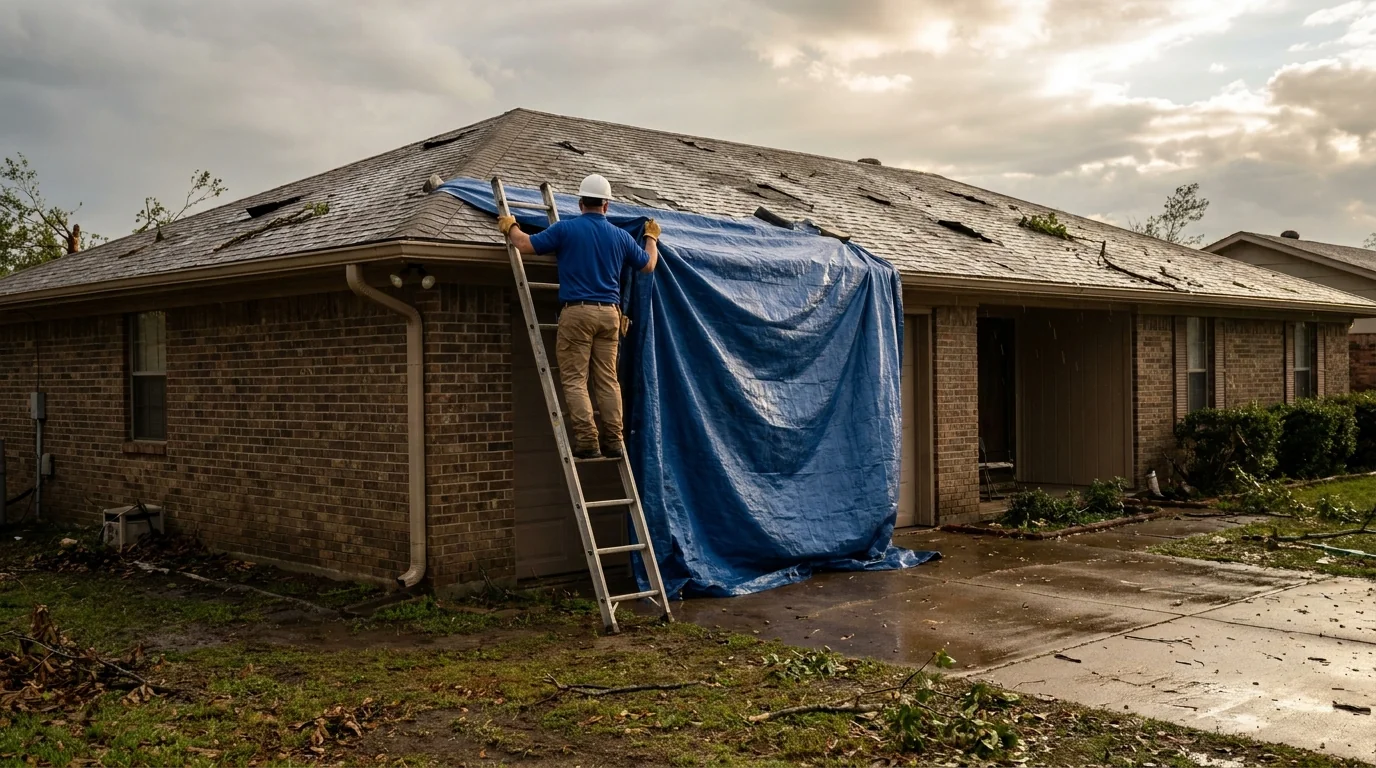
Once the scope is documented — with photographs and written notes formatted for insurance submission — we move into controlled drying. Structural drying on homes with original 1960s plaster ceilings requires a different approach than newer drywall construction: plaster releases absorbed moisture more slowly and can mask elevated readings on the surface while staying wet internally for days. We use penetrating moisture meters alongside standard surface readings to avoid premature sign-off on drying. Damaged roofing materials are tarped or boarded immediately to stop ongoing intrusion while the restoration timeline is established. Tree limb removal and debris clearing are handled as part of the job, not billed as a separate contractor visit.
Duncanville Insurance Coordination
Most storm damage claims in Duncanville run through standard homeowners’ policies, and the documentation requirements from carriers have become more detailed in recent years — particularly for roof claims, where insurers increasingly want scope-of-loss reports that distinguish wind damage from pre-existing wear. We prepare that documentation as a standard part of our process, not as an add-on.
If your policy includes an ALE (additional living expense) provision and the damage makes your home temporarily uninhabitable, we can help you understand what that coverage typically covers and what timeline to communicate to your adjuster. We work directly with adjusters and can be present during the inspection walk-through to make sure the full scope — including secondary water intrusion that may not be visible on a quick exterior review — is captured in the initial claim rather than added as a supplement later.
Local Note: What Duncanville Crews Know About Post-Storm Soil Conditions
After a significant storm event, the Blackland Prairie clay around Duncanville foundations can stay saturated for days even when the sun returns. This matters for restoration work because saturated soil against a slab creates a vapor drive pushing moisture upward through concrete — a condition that can keep interior relative humidity elevated and slow structural drying even after all visible water is removed. Crews unfamiliar with this soil behavior sometimes close out a drying job prematurely because surface readings look acceptable while the slab is still transmitting moisture from below. On properties near Armstrong Park and throughout the older sections of the city, we extend monitoring periods and verify slab moisture before releasing the drying equipment.
If you are dealing with storm damage to your Duncanville home or business, call MCC Restoration and Contracting Services at (682) 772-9123. We are local, we know these homes, and we can help you move from damage assessment to a finished, documented restoration without the coordination headaches that come with out-of-area contractors who leave town when the storm chase is over.
Storm Damage Restoration in Duncanville: Service Coverage
Frequently Asked Questions
Are homes in the Swan Ridge and Cedar Ridge areas of Duncanville more likely to have hidden water damage after a hail storm?
How does Duncanville's Blackland Prairie clay affect the drying timeline after a storm flood event?
Does storm damage in the 75116 zip code typically involve both roof damage and foundation-related issues at the same time?
What does the storm damage restoration process look like for a typical Duncanville brick ranch home?
How does MCC handle insurance documentation for storm claims in Duncanville, and can you be present during the adjuster's inspection?
Storm Damage Restoration in Duncanville
Our crews are based in Duncanville, TX and take on projects across Duncanville. Call for a free estimate.