Flood Damage Restoration in Duncanville
Flood damage restoration in Duncanville, TX. Insurance billing accepted. Call (682) 772-9123.
Our crews are headquartered right here in Duncanville and take on projects across the surrounding area.
Duncanville sits on some of the most reactive Blackland Prairie clay in the Dallas-Fort Worth metro, and that geology makes flood damage here a different problem than it is in most of North Texas. When heavy spring rains saturate the soil around the 1960s and 1970s brick ranches that line streets near Swan Ridge and Cedar Ridge, that clay swells, shifts, and squeezes against slab edges — sometimes cracking supply lines that have already been stressed by decades of seasonal movement. Add a severe thunderstorm or a hail event that punches through an aging roof, and water can be moving through multiple pathways at once before a homeowner realizes the full scope of the loss. MCC Restoration and Contracting Services is based right here in Duncanville, and flood cleanup in this community is work we understand from the ground up.
Why Duncanville Properties See Flood Damage Differently
The housing stock throughout the 75116 ZIP code tells a consistent story: slab-on-grade construction from the postwar building boom, original cast-iron or galvanized supply lines in many homes, and brick veneer that looks solid but can wick moisture into wall cavities for days after the exterior dries. North Texas hail alley delivers roof punctures every spring — a compromised shingle over a Cedar Ridge ranch can funnel water into the attic and down interior walls for weeks before a stain appears on the ceiling.
The February 2021 winter storm Uri is still fresh in many Duncanville homeowners’ memories. Pipes burst across the city in a single night, and the damage pattern was predictable: supply lines in exterior walls and under-slab runs that had never been insulated because the local climate rarely demanded it. Homes near the Wheatland Road corridor saw some of the highest call volumes during that event because the neighborhood’s 1970s construction used thinner wall cavities with minimal insulation around plumbing. That same vulnerability exists today for the next hard freeze.
Humid Dallas summers compound the problem. Any flood loss that isn’t dried completely within 48 to 72 hours creates ideal conditions for mold colonization — and in Duncanville’s older homes, that mold often establishes behind baseboards and inside wall cavities where it isn’t visible until a remediation crew opens the structure.
Our Flood Damage Restoration Process in Duncanville
Every flood cleanup job starts with a thorough moisture mapping inspection. We use thermal imaging and calibrated moisture meters to trace water migration through slab, subfloor, wall cavities, and ceiling assemblies — because in a 1960s brick ranch, water rarely stays where it entered. We document everything photographically before any material is moved, which matters when you’re filing a claim.
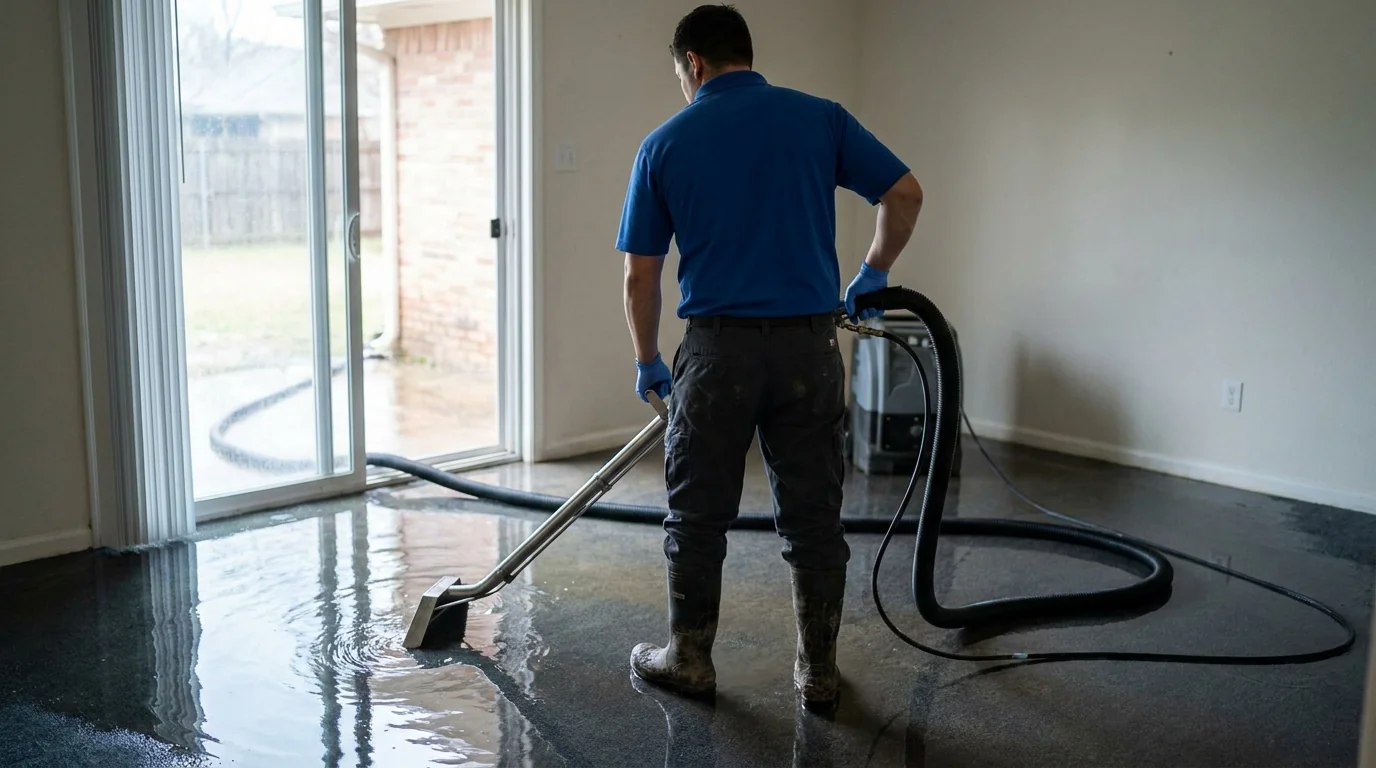
Extraction comes first: truck-mounted and portable units pull standing water from flooring, subfloor, and crawl spaces. Structural drying follows with industrial air movers and desiccant or refrigerant dehumidifiers sized to the actual square footage and material types in the affected space. Drying logs are recorded daily so the process is defensible to your insurer. Affected materials — saturated drywall, buckled hardwood, soaked insulation — are removed only when moisture readings confirm they cannot be dried in place, keeping demolition targeted rather than wholesale.
Once the structure reads dry, we handle the rebuild: drywall, texture, flooring, trim, and paint matched to existing finishes. You work with one contractor from water on the floor to finished room, which simplifies scheduling and insurance documentation.
Duncanville Insurance Coordination
Most flood losses in Duncanville involve either homeowners insurance (for sudden and accidental losses like burst pipes or storm intrusion) or NFIP flood policies (for rising-water events near Joe Pool Lake vicinity and low-lying drainage corridors). The documentation requirements differ, and the scope of what each policy covers can vary significantly.
We prepare detailed line-item estimates in the format adjusters expect, photograph all affected materials before and after removal, and communicate directly with your adjuster when questions arise about scope. If your carrier sends an independent adjuster who wants to reduce the drying scope, we can walk through the moisture data with them — that conversation goes better when the drying logs are complete and organized from day one.
Local Note
One thing that catches homeowners off guard in older Duncanville neighborhoods like Swan Ridge: the original hardwood floors common in homes built between 1955 and 1975 are typically tongue-and-groove planks nailed directly to the slab with no subfloor gap. When those floors flood, moisture migrates laterally under the entire floor field — sometimes well beyond the visible wet area — and the concrete slab itself holds that moisture for an extended drying period. We’ve seen slab moisture readings stay elevated for two to three weeks after the surface looks and feels dry. Rushing a hardwood reinstallation before the slab reaches equilibrium is one of the most common reasons a floor fails again within a year. We monitor slab readings through the full drying cycle before any flooring goes back down.
If you’re dealing with flood damage in Duncanville — whether it’s a burst pipe behind the walls, storm water through a compromised roof, or rising water from a drainage event — call MCC Restoration and Contracting Services at (682) 772-9123. We’re local, we know these homes, and we’ll give you a straight assessment of what the damage actually involves and what it will take to restore it properly.
Flood Damage Restoration in Duncanville: Service Coverage
Frequently Asked Questions
Are homes in the Wheatland Road corridor more vulnerable to flood damage from burst pipes than newer Duncanville construction?
How does Duncanville's Blackland Prairie clay affect the flood damage restoration process compared to other DFW cities?
Does flood damage in the 75116 ZIP code typically involve NFIP flood insurance or standard homeowners coverage?
What does post-flood restoration look like for a 1960s brick ranch in Cedar Ridge with original hardwood floors?
How long does flood damage restoration typically take for a single-story Duncanville home?
Flood Damage Restoration in Duncanville
Our crews are based in Duncanville, TX and take on projects across Duncanville. Call for a free estimate.