Sewage Cleanup and Sanitization in Grand Prairie
Sewage cleanup and sanitization in Grand Prairie, TX. Insurance billing accepted. Call (682) 772-9123.
Our crews are dispatched from our Duncanville, TX headquarters and respond quickly to projects across Grand Prairie.
When a sewer line backs up or a septic system overflows in Grand Prairie, the mess doesn’t wait for a convenient time — and in a city where the older neighborhoods north of I-30 sit on clay-heavy soil that shifts with every Texas drought-and-rain cycle, aging cast-iron drain lines crack and collapse more often than homeowners expect. Raw sewage in a living space carries bacteria, viruses, and pathogens that contaminate porous materials fast, and the DFW summer heat accelerates that process. MCC Restoration and Contracting Services responds to sewage backups across Grand Prairie, from the established streets of Dalworth to the newer two-story homes along Lake Ridge Parkway.
Why Grand Prairie Properties See Sewage Backup Issues
Grand Prairie’s geography creates two very different sewage-risk profiles depending on which end of the city you’re in. The north end — neighborhoods like Dalworth and Westchester, built largely in the 1940s through 1960s — relies on original cast-iron and clay-tile sewer laterals that have spent decades contracting and expanding in the Blackland Prairie clay. Tree root intrusion is common, and a single hard rain after a dry stretch can cause enough ground movement to crack a lateral and push sewage back through the lowest floor drain in the house.
Down south, the story is different. Grand Peninsula, Mira Lagos, and the Lake Parks area are 2000s–2020s construction, often two-story homes with upstairs laundry rooms, master bath wet bars, and second-floor dishwasher connections. When a wax ring fails or a supply line lets go upstairs, the wastewater travels through the subfloor and into finished first-floor ceilings before anyone notices the smell. The contamination footprint is larger than it looks, and because these homes are often in HOA communities, there are exterior staging and access considerations that affect how quickly cleanup can begin.
Grand Prairie also sits squarely in the DFW hail corridor. Roof damage from hail storms can compromise vent stack flashing, which in turn lets rainwater infiltrate the drain-waste-vent system and create conditions that mimic a slow sewage backup — a pattern our crews have seen repeatedly in homes near Joe Pool Lake after major storm seasons.
Our Sewage Cleanup and Sanitization Process in Grand Prairie
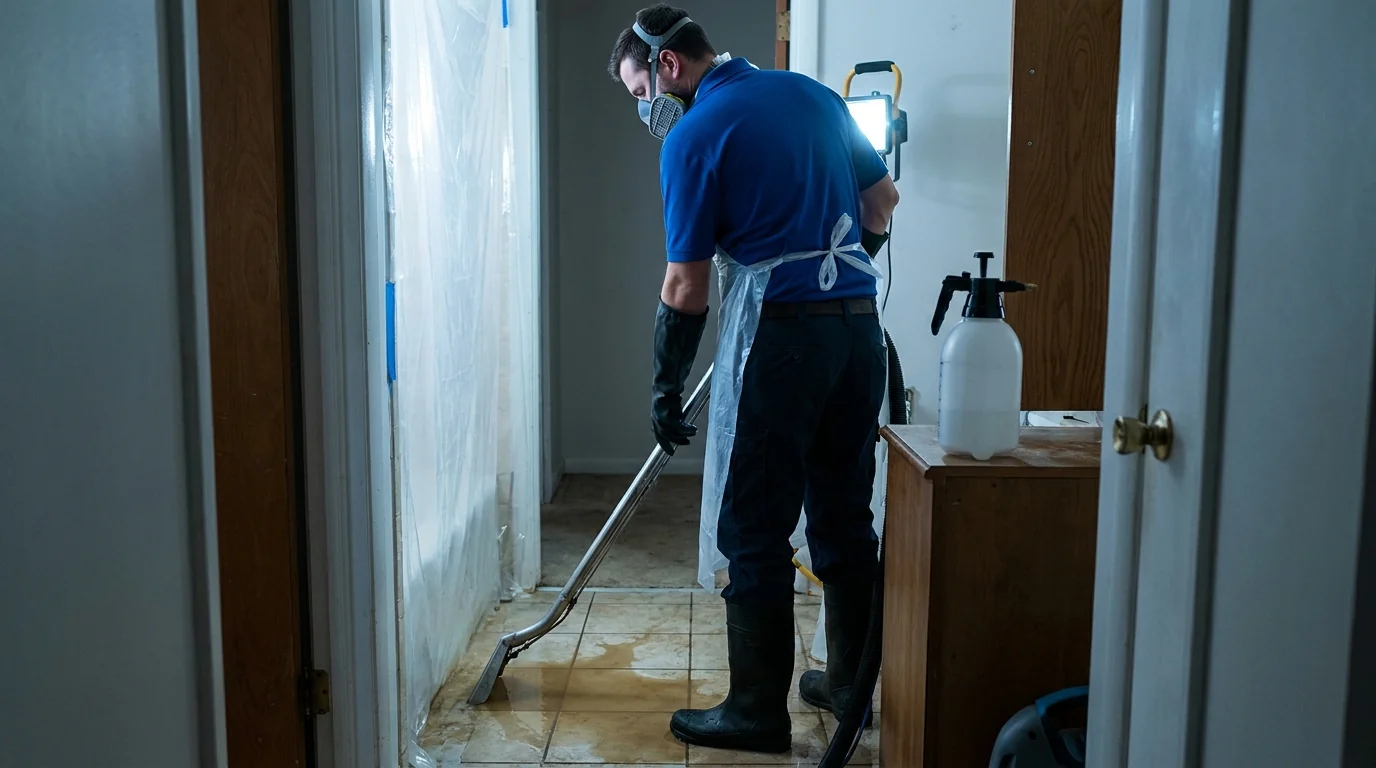
Sewage cleanup is a Category 3 water loss — the most contaminated classification — and the process reflects that. When we arrive at a Grand Prairie property, the first step is containment: sealing off the affected area to prevent cross-contamination to unaffected rooms. We document everything photographically before touching a single material, because insurance carriers require that documentation and Grand Prairie homeowners shouldn’t have to fight for their claim.
Extraction comes next. Standing sewage water is removed with truck-mounted or portable extraction units, depending on access. Contaminated porous materials — drywall, insulation, carpet, pad, and in older Dalworth-area homes, plaster and lathe — are removed and bagged for proper disposal per Texas Commission on Environmental Quality (TCEQ) guidelines. Hard surfaces are then treated with EPA-registered disinfectants rated for Category 3 contamination. We don’t cut corners to Category 2 protocols on a sewage loss; the pathogen load is different and the sanitization standard has to match.
After sanitization, structural drying begins. Grand Prairie’s humidity swings — dry in summer drought, humid after Gulf moisture pushes north — mean we monitor moisture readings in the framing and subfloor daily rather than pulling equipment on a fixed schedule. Drying is complete when readings return to pre-loss baselines, not when a calendar says so.
Reaching Grand Prairie from Duncanville
MCC Restoration’s base in Duncanville puts us immediately adjacent to Grand Prairie’s western boundary. Heading east on US-67 or cutting through on Camp Wisdom Road, we can reach properties near the Dalworth and Westchester corridors without navigating the I-20 interchange backups that slow down crews coming from Dallas proper. For addresses in the south end — Grand Peninsula, Mira Lagos, and the 75054 ZIP code — we typically route down TX-360 or Lake Ridge Parkway, which keeps us off the congested I-20/TX-360 interchange during peak hours. If you’re calling during business hours, let the dispatcher know your cross streets and we’ll give you an honest arrival estimate based on current conditions.
Grand Prairie Insurance Coordination
Sewage backup coverage in Texas is not automatic — it’s typically a separate endorsement on a homeowner’s policy, and many Grand Prairie residents don’t realize they lack it until they’re standing in an inch of contaminated water. We document losses thoroughly from the moment we arrive: photos, moisture readings, material inventories, and scope notes formatted the way adjusters expect to receive them. We work with most major carriers and can communicate directly with your adjuster to keep the claim moving. If coverage is limited or disputed, we’ll walk you through what the documentation shows so you can make an informed decision about next steps.
Local Note
In Grand Prairie’s south-end HOA communities — particularly those built around the Grand Peninsula and Mira Lagos developments — many declarations require that contractors working on exterior-adjacent areas notify the HOA management company before staging equipment on common driveways or parking areas. On sewage jobs where we need to run hoses from a truck-mount unit, that staging matters. We’ve learned to make that call to the HOA contact before we pull onto the street, which prevents work stoppages that cost homeowners time when every hour counts in a Category 3 loss.
If you’re dealing with sewage backup or a septic overflow anywhere in Grand Prairie — ZIP codes 75050 through 75054, north end or south — call MCC Restoration and Contracting Services at (682) 772-9123. We’ll assess the damage, explain the process plainly, and get your home back to a safe, dry condition.
Sewage Cleanup and Sanitization in Grand Prairie: Service Coverage
Frequently Asked Questions
Are homes in Grand Prairie's Dalworth neighborhood more prone to sewer line backups than newer construction?
Does Grand Prairie have specific disposal rules for contaminated materials removed during sewage cleanup?
How does Grand Prairie's climate affect how long sewage cleanup and drying takes?
My home is in the 75054 ZIP code near Mira Lagos — will my HOA create delays in getting sewage cleanup started?
What's the difference between sewage backup cleanup and standard water damage restoration, and why does it matter for my Grand Prairie home?
Sewage Cleanup and Sanitization in Grand Prairie
Our crews are based in Duncanville, TX and take on projects across Grand Prairie. Call for a free estimate.