Water Damage Restoration in Duncanville
Water damage restoration in Duncanville, TX. Insurance billing accepted. Call (682) 772-9123.
Our crews are headquartered right here in Duncanville and take on projects across the surrounding area.
Duncanville sits on some of the most active Blackland Prairie clay in the Dallas–Fort Worth metro, and that soil doesn’t stay still. Seasonal swelling and shrinking shifts slabs, stresses supply lines, and quietly cracks the under-foundation plumbing that runs beneath thousands of brick ranch homes built between the 1950s and 1980s. By the time a homeowner notices discolored flooring or a spike in the water bill, the damage is already spreading. MCC Restoration and Contracting Services is based right here in Duncanville — we know this city’s housing stock, its soil, and exactly what a water loss looks like inside these homes.
Why Duncanville Properties See More Water Damage Than Most
The clay soil beneath neighborhoods like Swan Ridge and Cedar Ridge expands and contracts with every rain cycle and dry stretch. That movement is relentless, and it’s the single biggest reason slab leaks are so common in this part of the Best Southwest corridor. A slow leak under a concrete foundation can saturate the subfloor, wick into wall cavities, and travel surprising distances before it surfaces as a soft spot or a musty odor.
Beyond slab movement, North Texas hail season punches through roofing every spring — one storm can compromise enough shingles to let water pour into attics and ceilings during the next rain. And February 2021 made it painfully clear how vulnerable older copper and galvanized supply lines are when temperatures drop hard and fast. Burst pipes from that freeze caused water losses across the entire city in a matter of hours. Humid summers do the rest: any moisture left unresolved past 24 to 48 hours creates conditions where mold can begin colonizing drywall, insulation, and wood framing.
Our Water Damage Restoration Process in Duncanville
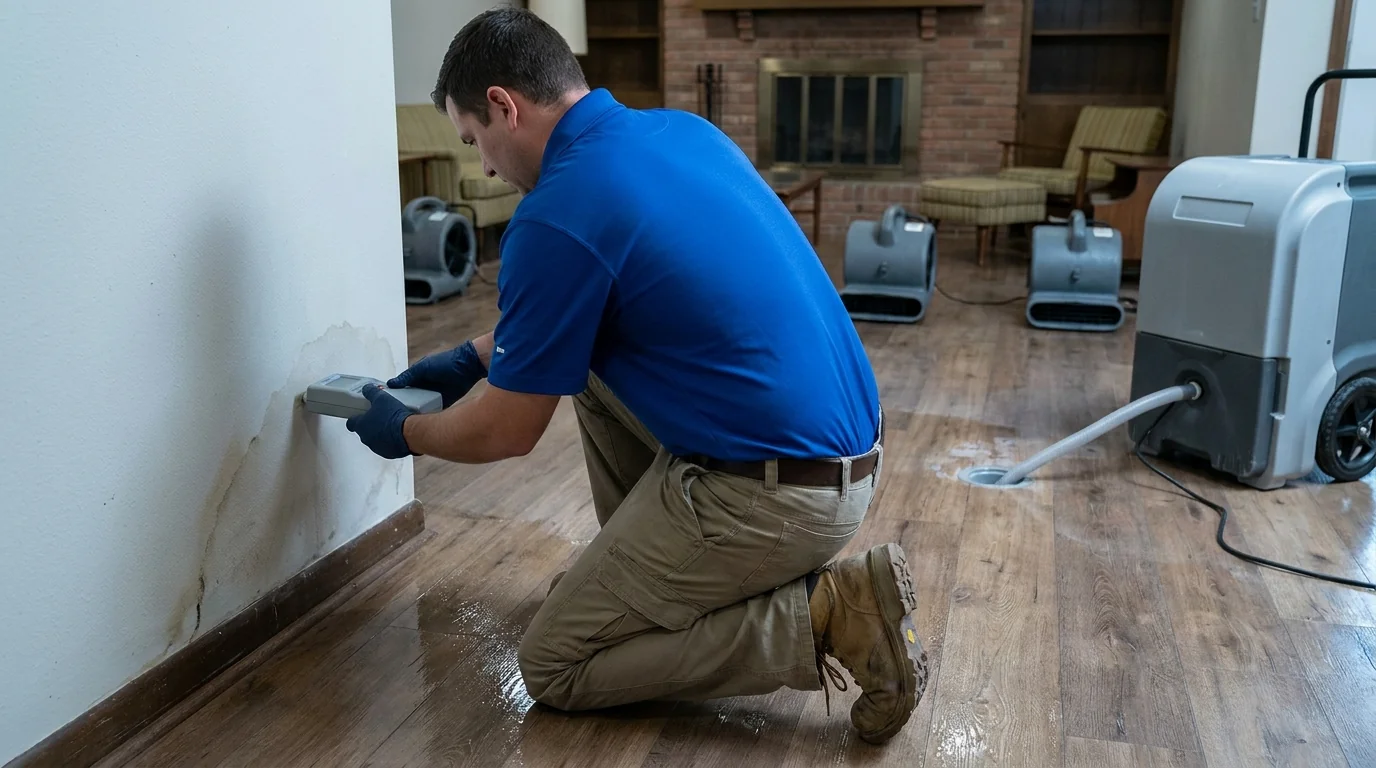
Every job starts with a thorough moisture inspection — not just the visible wet area, but the walls, subfloor, and adjacent rooms. In Duncanville’s older ranch-style homes, water travels along the slab and under vinyl or hardwood flooring well beyond where it first appeared. We use thermal imaging and calibrated moisture meters to map the full extent of saturation before a single piece of equipment is placed.
From there, the process moves through these stages:
- Water extraction — truck-mounted and portable extraction units pull standing water and saturated material from flooring and cavities.
- Structural drying — industrial air movers and desiccant or refrigerant dehumidifiers are positioned based on the moisture map, not guesswork. Drying targets follow the IICRC S500 standard for structural drying.
- Monitoring — we return daily to log moisture readings and adjust equipment placement. Drying typically runs three to five days depending on materials and saturation depth.
- Controlled demolition if needed — saturated drywall, insulation, and flooring that cannot be dried in place are removed to prevent hidden mold growth.
- Documentation — photos, moisture logs, and scope notes are compiled throughout, which matters significantly when an insurance claim is involved.
Serving the Duncanville Area — Neighborhoods and Access
MCC Restoration is headquartered in Duncanville, so we’re not driving in from another city when you call. Whether the loss is in the Wheatland Road corridor on the south end of town, near the Main Street district closer to the city center, or in a neighborhood off Duncanville Road near the Fieldhouse, we’re already local. That matters when standing water is actively spreading or when a slab leak has been running undetected and every hour counts.
For properties in the 75116 ZIP code — which covers much of central and western Duncanville — we’re familiar with the subdivision layouts, the typical slab construction, and the age of the housing stock. That familiarity shortens the assessment phase and gets drying equipment running faster.
Insurance Coordination for Duncanville Water Losses
Most homeowner policies in Texas cover sudden and accidental water damage — burst pipes, appliance failures, and storm-driven intrusion — but the documentation requirements matter. Carriers want moisture readings, photos of affected materials, and a clear scope of work before they approve drying and repair costs.
We prepare that documentation as part of every job, not as an add-on. We communicate directly with adjusters, provide the moisture logs and photo evidence they need, and can work within the claim process so you’re not managing two conversations at once during an already stressful situation.
Local Note
One thing we’ve learned working in Duncanville specifically: homes built in the 1960s and 1970s throughout neighborhoods like Cedar Ridge often have original cast-iron or galvanized drain lines running under the slab alongside the supply plumbing. When a slab leak is detected, it’s worth scoping the drain lines at the same time — they corrode from the inside out and can introduce a second water intrusion source that doesn’t show up until after the first repair is complete. Catching both issues in one mobilization saves homeowners a significant amount of time and disruption.
If you’re dealing with water damage right now — whether it’s a burst pipe, a slow slab leak that finally surfaced, or storm water that got in through a compromised roof — call MCC Restoration and Contracting Services at (682) 772-9123. We’re local to Duncanville, we understand what these homes need, and we’ll get the right equipment in place to stop the damage from going further.
Water Damage Restoration in Duncanville: Service Coverage
Frequently Asked Questions
Are homes in Swan Ridge and Cedar Ridge more prone to slab leaks than newer construction?
How does Duncanville's clay soil affect the structural drying timeline after a water loss?
What should Duncanville homeowners do immediately after a burst pipe before the restoration crew arrives?
Does a water loss in a 75116 ZIP code home typically require permit pulls for the repair work?
How do you handle water damage documentation for insurance claims on Duncanville properties?
Water Damage Restoration in Duncanville
Our crews are based in Duncanville, TX and take on projects across Duncanville. Call for a free estimate.