Smoke Damage Restoration in Duncanville
Smoke damage restoration in Duncanville, TX. Insurance billing accepted. Call (682) 772-9123.
Our crews are headquartered right here in Duncanville and take on projects across the surrounding area.
When a fire moves through a Duncanville home — whether it started in a kitchen off Wheatland Road or spread from a garage in Cedar Ridge — the flames are usually out within the hour. What lingers is the smoke. Soot particles embed into the porous mortar joints of the brick ranch construction that defines so much of Duncanville’s 1950s–1980s housing stock, and the sulfur-laced odor from burned synthetics can reactivate for weeks if the residue isn’t fully neutralized. Getting smoke damage restoration right here means understanding the specific materials these homes are built from — not just running a generic cleanup protocol.
Why Duncanville Homes Are Particularly Vulnerable to Smoke Damage
The Blackland Prairie clay beneath Duncanville is relentless. It expands and contracts with every wet-dry cycle, and that seasonal movement gradually opens hairline cracks in slab foundations and the brick veneer walls above them. Those micro-gaps aren’t just a structural footnote — they’re pathways. During a fire, smoke and soot migrate into wall cavities through cracks that wouldn’t be visible on a normal day, depositing residue behind drywall or inside the original plaster-and-lath construction common in homes near the Main Street district.
North Texas also sits squarely in hail alley. Spring storms routinely compromise roof decking and attic insulation across Duncanville, and a home with an already-damaged attic envelope is far more susceptible to smoke infiltration when fire occurs. Attic insulation that has absorbed smoke odor is one of the most commonly missed sources of persistent smell after a fire — it holds volatile organic compounds long after visible soot has been cleaned from living spaces.
Our Smoke Damage Restoration Process in Duncanville
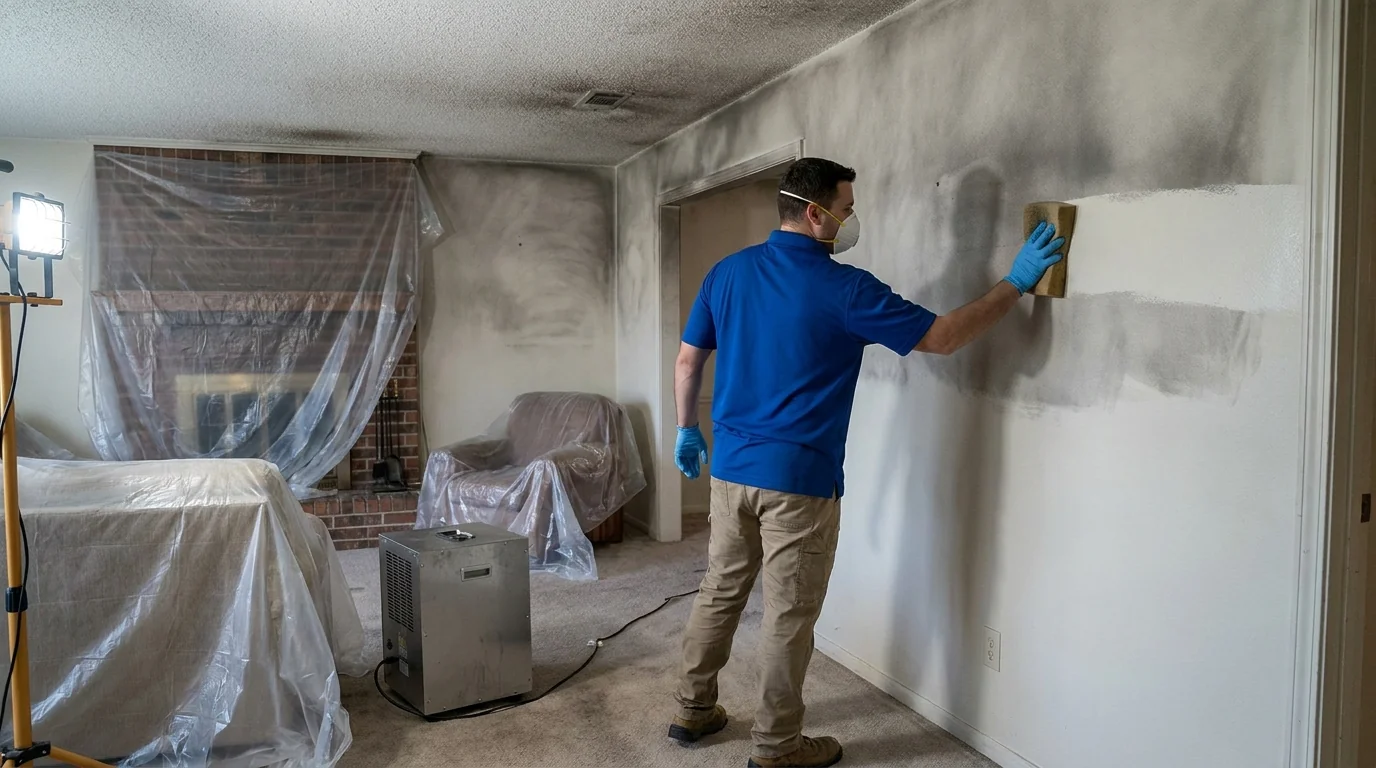
Every job starts with a room-by-room assessment that maps soot type — dry, wet, or protein-based — because each requires a different chemistry to neutralize. Dry soot from fast-burning fires smears if wiped incorrectly; protein residue from kitchen fires is nearly invisible but produces an intense odor that standard cleaning won’t touch. In Duncanville’s older homes, that assessment also includes testing brick mortar, original hardwood floors, and any remaining plaster surfaces for deep absorption.
From there, the process moves through:
- Controlled demolition of materials too saturated to restore (drywall, insulation, cabinetry with delaminated finishes)
- HEPA-filtered dry sponge and chemical sponge cleaning of ceilings, walls, and structural framing
- Thermal fogging and hydroxyl generation to reach odor molecules inside wall cavities and HVAC ductwork — critical in homes where original duct runs were built into the slab or ceiling plenum
- Duct cleaning and sealing, because smoke travels through return-air pathways and will re-contaminate cleaned rooms if the HVAC system isn’t addressed
- Odor verification before any reconstruction begins, so new drywall isn’t installed over a residual smell problem
Reconstruction — drywall, texture, paint, trim, and finish carpentry — is handled in-house, which eliminates the coordination gap between the cleanup crew and the rebuild crew that often extends timelines on fire jobs.
Duncanville Insurance Coordination
Most fire and smoke losses in the 75116 and 75137 ZIP codes are covered under standard homeowners policies, but the documentation requirements vary by carrier. We photograph and catalog affected materials before anything is removed, generate moisture and soot readings as supporting data, and produce a scope of work formatted to align with Xactimate line items — the estimating platform most Texas adjusters use. That documentation reduces the back-and-forth that delays claim approvals and keeps your project moving.
If your carrier sends an independent adjuster to the property, we’re available to walk the scope with them on-site. Gaps between what a remote desk adjuster approves and what the actual damage requires are common on older homes, and a direct conversation on the property tends to close those gaps faster than written supplements alone.
Local Note
Duncanville’s brick ranch homes — particularly those in Swan Ridge and the neighborhoods surrounding Armstrong Park — were built with original wood-framed interior walls finished in a thin coat plaster over drywall, a hybrid construction method common in Dallas-area tract building from the late 1960s through the mid-1970s. That plaster layer absorbs smoke odor differently than standard drywall: it releases volatile compounds more slowly, which means a home can smell clean at day three and develop a noticeable odor again at day ten as the plaster off-gasses. We account for this by extending the odor-monitoring window on these properties and scheduling a follow-up hydroxyl treatment before closing out the job.
If you’re dealing with smoke damage in Duncanville — whether the fire was contained to one room or moved through the structure — call MCC Restoration and Contracting Services at (682) 772-9123. We’re based here, we know these homes, and we’ll give you an honest assessment of what it actually takes to get the smell out and the property back to livable condition.
Smoke Damage Restoration in Duncanville: Service Coverage
Frequently Asked Questions
How does Duncanville's older brick ranch housing stock affect the smoke damage restoration process?
Smoke from a kitchen fire has been in my Swan Ridge home for several days — is it too late to fully restore it?
Will a spring hail storm that damaged my roof make smoke damage worse in a Duncanville home?
How do you handle smoke damage that has spread into the HVAC ductwork in a Duncanville home?
How does the claims process work for smoke damage in the 75116 ZIP code, and does documentation affect the settlement?
Smoke Damage Restoration in Duncanville
Our crews are based in Duncanville, TX and take on projects across Duncanville. Call for a free estimate.