Smoke Damage Restoration in Duncanville
Smoke damage restoration in Duncanville and surrounding areas. Insurance billing accepted. Call (682) 772-9123.
Smoke moves through a structure faster than most people expect. Within hours of a fire being extinguished, acidic soot particles have already etched into metal fixtures, yellowed painted walls, and embedded into porous materials like drywall, insulation, and wood framing. The visible char gets attention — it’s the invisible smoke residue that keeps damaging your home long after the flames are out, and it’s the part that most general contractors aren’t equipped to address.
What Smoke Damage Restoration actually involves
Smoke damage restoration is not painting over stained walls or running an air freshener. It’s a systematic process of identifying every surface and cavity where smoke particles have migrated, then applying the right chemistry and equipment to neutralize and remove them.
Smoke travels through wall cavities, HVAC ductwork, and attic spaces — often far beyond the room of origin. In a typical Duncanville home, which may be a 1970s or 1980s brick ranch or a newer wood-frame build, smoke can penetrate into wall assemblies and sit undetected until the odor returns weeks later, especially when summer heat drives temperatures inside wall cavities above 100°F.
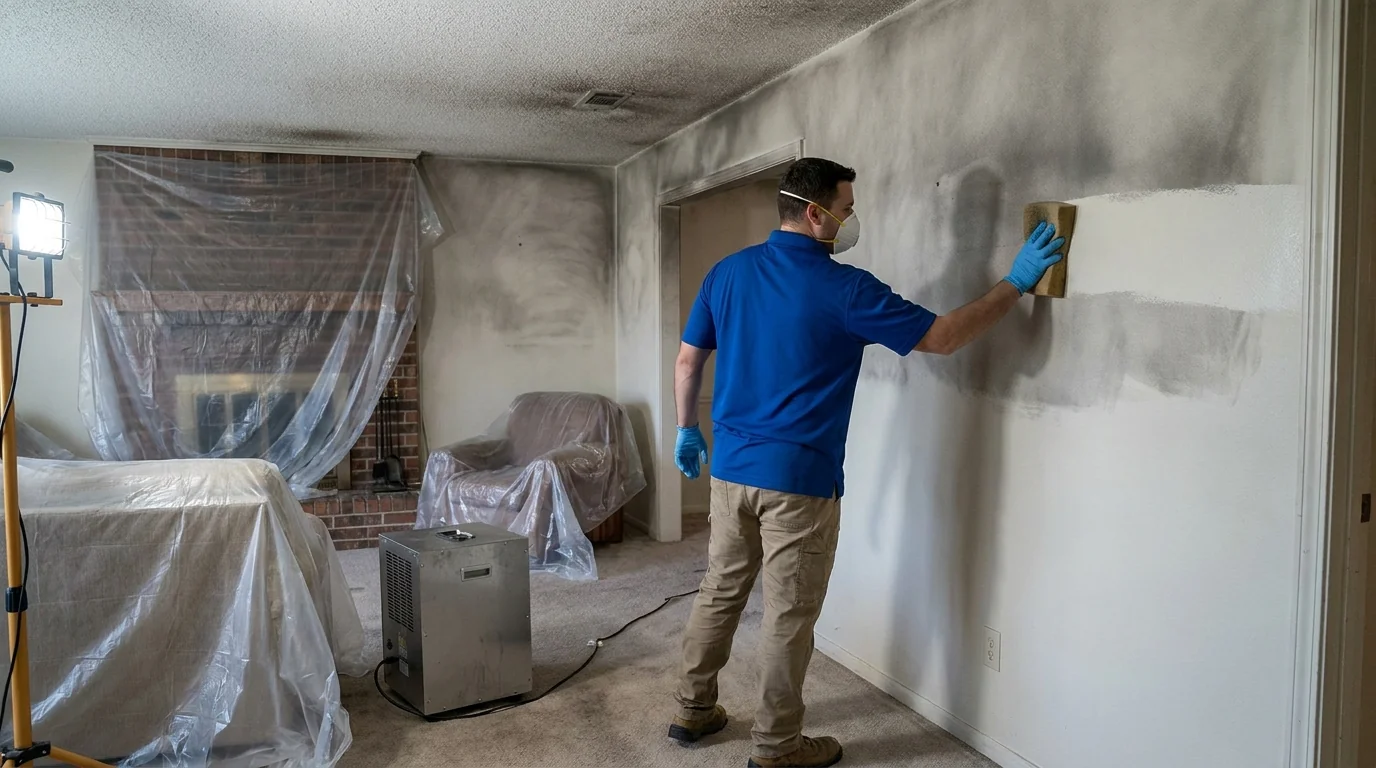
The work involves dry chemical sponges and wet cleaning agents matched to the soot type, thermal fogging or hydroxyl generation to neutralize odor molecules embedded in soft goods and structural materials, HEPA air scrubbers to reduce airborne particulate, and in many cases, controlled demolition of materials that cannot be cleaned to an acceptable standard. Ductwork inspection and cleaning is often a required step — smoke-coated duct lining will re-contaminate a cleaned home every time the HVAC runs.
Timeline varies by severity. A contained kitchen fire with limited smoke spread may resolve in two to four days. A whole-house smoke event following a structure fire can take one to three weeks before the space is ready for reconstruction.
Our process
-
Soot characterization and scope assessment. Not all soot is the same. Protein soot from a kitchen fire (burned food, grease) is nearly invisible but produces an intense odor and bonds aggressively to surfaces. Synthetic soot from burning plastics, wiring, or foam leaves a thick, oily black residue that smears if cleaned incorrectly. Natural material soot from wood or paper is more porous and responds differently to wet cleaning. Before any cleaning begins, we identify the soot types present and map the migration path through the structure.
-
Containment and HVAC isolation. We seal the HVAC system before any disturbance work begins. Agitating soot without containment pushes particles into ducts and unaffected rooms, creating secondary contamination. Plastic barriers isolate the work area and negative air pressure keeps disturbed particles from migrating.
-
Surface cleaning — dry then wet. Dry chemical sponges lift loose soot from walls, ceilings, and structural members without smearing. Wet cleaning with pH-appropriate detergents follows for bonded residue. Protein soot typically requires enzymatic cleaners. Synthetic soot may need solvent-based products on certain surfaces. Sequence matters — wet cleaning over uncleared dry soot embeds it deeper.
-
Odor neutralization. Masking agents wear off. Permanent odor control requires neutralizing the odor molecules themselves. Thermal fogging disperses a deodorizing agent in a smoke-like vapor that penetrates the same cavities the original smoke reached. Hydroxyl generators are used in occupied or sensitive environments where thermal fogging is not appropriate. Both methods require dwell time — the space cannot be re-occupied immediately after treatment.
-
Post-cleaning verification and documentation. Final walkthrough confirms all affected surfaces have been addressed. We document cleaned areas, materials removed, and equipment used — this documentation supports your insurance claim and establishes a baseline if odor returns.
What separates a good smoke damage response from a bad one
The most common failure in smoke damage work is incomplete scope — cleaning what’s visible and missing what isn’t. Smoke in wall cavities, attic insulation, and ductwork is invisible at first inspection. Contractors who skip thermal imaging or probing of wall assemblies will miss it. The homeowner notices nothing until the first hot week of the year, when heat drives residual odors back out of the walls.
A second common failure is mismatched chemistry. Using the wrong cleaner on protein soot can set it permanently. Alkaline cleaners on certain metals cause corrosion. Wet-wiping a surface covered in dry soot before removing the loose layer first smears residue into the substrate.
Insurance adjusters look for itemized documentation: what surfaces were affected, what cleaning method was applied to each, what materials were removed rather than cleaned, and what odor control method was used. Vague invoices — “smoke cleaning, 8 hours” — invite disputes. Detailed line-item documentation moves claims forward.
Seasonal and regional considerations
North Texas summers create a specific challenge for smoke-damaged homes. Temperatures inside unventilated wall cavities and attic spaces routinely exceed 120°F from June through September. That heat volatilizes residual smoke compounds, causing odors to resurface in homes that appeared clean during cooler months. Restoration work done in spring or fall needs to account for this — odor neutralization should be verified under warm conditions before the job is closed out.
Wildfire smoke is also a growing concern across the Dallas–Fort Worth region. Unlike structure fire smoke, wildfire smoke infiltrates through HVAC systems, gaps in the building envelope, and window seals — affecting homes with no fire damage at all. Wildfire smoke cleanup focuses heavily on duct cleaning, filter replacement, and surface wiping rather than structural soot removal.
Service area
MCC Restoration and Contracting Services is based in Duncanville and serves the surrounding communities throughout the Dallas–Fort Worth area, including Cedar Hill, DeSoto, Midlothian, Grand Prairie, Mansfield, and the broader southern Dallas County region. Smoke damage restoration service pages for individual cities link back to this page for the full process detail.
If you’re dealing with soot on your walls, smoke odor that won’t clear, or the aftermath of a fire — call (682) 772-9123 to begin smoke and soot removal. The longer smoke residue sits on surfaces, the deeper it bonds.
Frequently Asked Questions
What is the difference between protein soot and synthetic soot, and why does it change how my home gets cleaned?
How do I know if smoke has traveled beyond the room where the fire occurred?
Why does smoke odor sometimes come back weeks after a home has been cleaned?
What does thermal fogging actually do, and is it safe to be in the home during or after treatment?
What documentation should I expect from a smoke damage restoration contractor for my insurance claim?
Looking for the best smoke damage restoration company in Duncanville?
MCC Restoration and Contracting Services provides smoke damage restoration in Duncanville, TX and the surrounding area. Call (682) 772-9123 for a free estimate.
Need Smoke Damage Restoration now?
We respond fast across Duncanville and surrounding TX cities.
Related Coverage
- Our Restoration Services
- Contact MCC Restoration and Contracting Services
- Smoke Damage Restoration in Cedar Hill
- Smoke Damage Restoration in Dallas
- Smoke Damage Restoration in DeSoto
- Smoke Damage Restoration in Duncanville
- Smoke Damage Restoration in Grand Prairie
- The Fire Damage Restoration Process, Explained
- How Professionals Remove Smoke Odor (and Why DIY Usually Fails)