Mold Remediation in Dallas
Mold remediation in Dallas, TX. Insurance billing accepted. Call (682) 772-9123.
Our crews are dispatched from our Duncanville, TX headquarters and respond quickly to projects across Dallas.
Dallas’s spring supercell season gets most of the headlines, but it’s the slow, invisible damage that follows — a flash flood soaking the crawlspace of a 1940s Kessler Park bungalow, or a galvanized supply line quietly weeping inside a plaster wall for weeks — that creates the conditions mold needs to take hold. In a city where summer humidity regularly pushes past 70% and clay soil keeps moisture pressed against foundations, mold can colonize porous materials in as little as 24 to 48 hours after a water event. If you’re seeing discoloration, smelling something musty, or just know your home took on water recently, the clock is already running.
Why Dallas Properties See Mold Problems
The housing stock across southern Dallas tells the story. Kessler Park and the streets surrounding Oak Cliff’s older corridors are lined with homes built between the 1920s and 1950s — original cast-iron drain lines, galvanized supply pipes, and plaster-over-lath wall systems that were never designed to shed water the way modern construction does. When those supply lines fail, which they do with increasing frequency as the clay soil shifts seasonally, water doesn’t just wet a stud cavity — it saturates the plaster, wicks into original hardwood subfloors, and sits. By the time a homeowner notices a soft spot or a stain, mold has often been active for days.
Further south, the 1970s and 1980s tract homes in Red Bird and the Mountain Creek area present a different set of vulnerabilities: HVAC systems with aging ductwork, slab foundations that crack along clay-expansion lines, and attic spaces that trap heat and humidity in a way that accelerates mold growth after even minor roof damage from hail. The Trinity River Greenbelt and the creek-adjacent streets in ZIP codes like 75211 and 75233 add a flash-flood dimension — when those low-lying areas take on water during a heavy rain event, it happens fast and it soaks deep.
Our Mold Remediation Process in Dallas
Every remediation starts with a thorough moisture and visual assessment — not just the obvious surface growth, but the hidden reservoirs feeding it. We use thermal imaging and moisture meters to map wet zones inside walls and under flooring before any demolition begins. This matters especially in older Oak Cliff homes where plaster walls can hold moisture at multiple depths simultaneously.
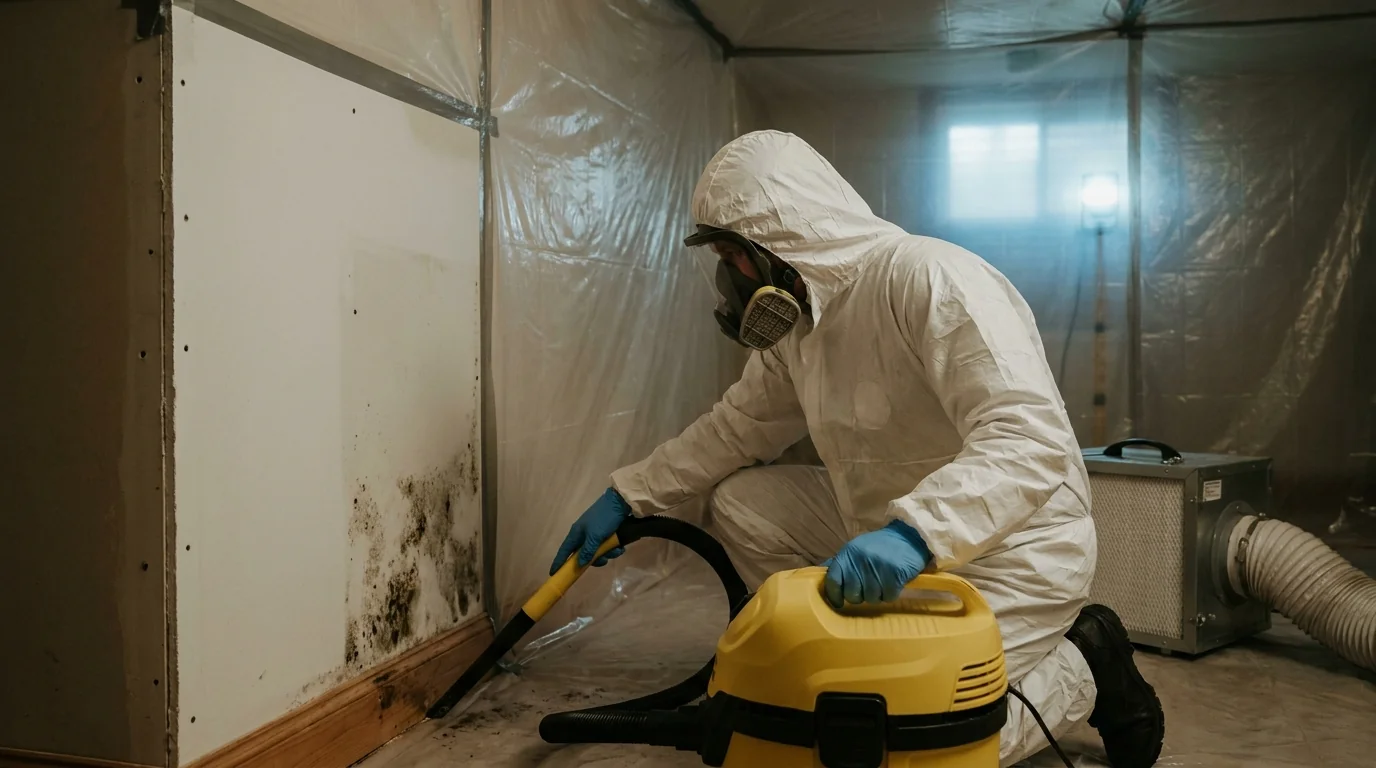
Once the scope is defined, we establish negative-air containment to prevent spores from migrating to unaffected areas of the home. Affected materials — drywall, insulation, subfloor sections — are removed and bagged per industry protocols. Structural surfaces are HEPA-vacuumed, treated with an EPA-registered antimicrobial, and dried to documented moisture levels before any reconstruction begins. We don’t close a job until clearance readings confirm the affected area is back within normal parameters.
For homes with original plaster walls, drying timelines run longer than they would in modern drywall construction. Plaster releases absorbed moisture slowly, and rushing that phase leads to mold recurrence — something we see frequently when homeowners use less thorough contractors after a storm season.
Reaching Dallas from Our Duncanville Base
MCC Restoration and Contracting Services operates out of Duncanville, which puts us a short drive from the neighborhoods we serve most often in southern Dallas. The Red Bird and Kiest Park area along US-67 is practically in our backyard, and Oak Cliff is a straightforward run up I-35E or Westmoreland Road. For scheduling and availability, call us directly at (682) 772-9123 — our team can give you a realistic arrival window based on current workload and your address.
Local Note: What Kessler Park’s Plaster Walls Mean for Mold Timelines
If you own one of the historic homes near Kessler Park or along the older Oak Cliff corridors, expect your remediation timeline to run longer than a neighbor in a newer build might experience. Plaster-over-lath walls absorb water at multiple layers and release it slowly — in our experience, full structural drying in these homes can take 30 to 50 percent longer than the same square footage in a 1980s or 1990s frame home with standard drywall. We account for this upfront when scoping the job, so there are no surprises mid-project. Rushing past this phase is the single most common reason mold returns after a remediation in older Dallas housing stock.
Dallas Insurance Coordination
Mold claims in Texas can be complicated. Since 2003, Texas insurance policies have carried specific mold coverage limits, and many standard homeowners policies cap mold remediation reimbursement at $5,000 unless additional coverage was purchased. We document affected materials photographically, provide itemized scope-of-work reports, and communicate directly with adjusters to support your claim. If your loss originated from a covered peril — a burst pipe, storm intrusion, appliance failure — that documentation trail matters enormously for getting your remediation costs covered.
If you’re dealing with mold growth in a Dallas home or commercial property, call MCC Restoration and Contracting Services at (682) 772-9123. We work across southern Dallas — from the historic neighborhoods of Oak Cliff to the creek-adjacent streets that flood every spring — and we’ll give you a straight assessment of what you’re dealing with and what it takes to fix it right.
Mold Remediation in Dallas: Service Coverage
Frequently Asked Questions
Are older homes in Kessler Park and Oak Cliff more likely to have hidden mold after a plumbing leak?
How does Dallas's clay soil contribute to mold problems in slab-foundation homes?
Does Texas's mold coverage cap affect how remediation is billed for Dallas homeowners?
What's involved in mold containment, and why does it matter in a densely occupied building?
How long does a typical mold remediation take for a home in the 75211 or 75233 ZIP codes?
Mold Remediation in Dallas
Our crews are based in Duncanville, TX and take on projects across Dallas. Call for a free estimate.