Renovations, Remodels and General Contracting in Duncanville
Renovations, remodels and general contracting in Duncanville and surrounding areas. Insurance billing accepted. Call (682) 772-9123.
What Renovations, Remodels and General Contracting actually involves
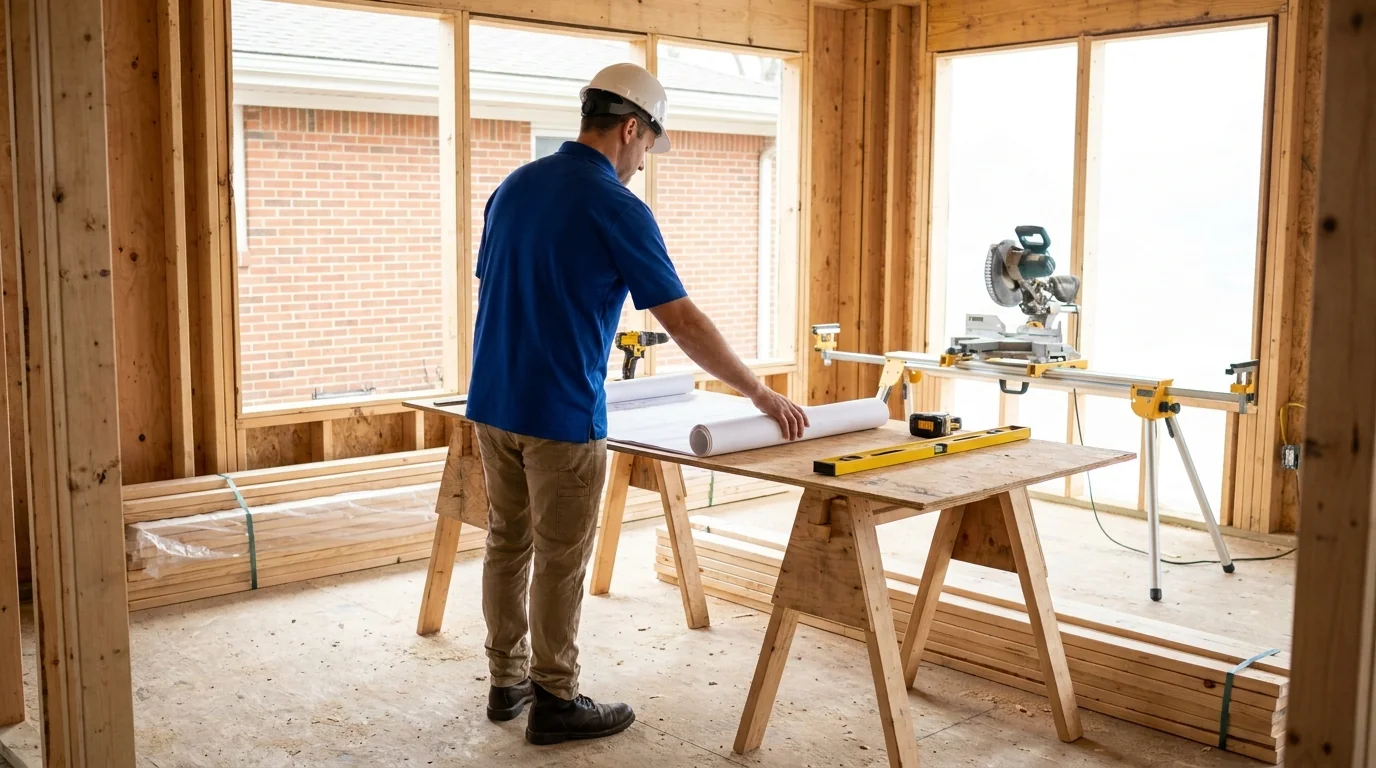
You’ve just finished dealing with a burst pipe, a kitchen fire, or years of deferred maintenance — and now you’re staring at a gutted room with exposed studs, missing drywall, and a subfloor that needs to be replaced before anyone can move back in. Or maybe there was no disaster at all: the 1980s tile and drop ceiling just finally hit their limit. Either way, the gap between a stripped-down space and a finished, livable room requires a general contractor who can coordinate trades, pull permits, and keep the project on a real schedule. That’s the work this page covers.
Renovations and remodels range from a single bathroom remodel — new tile, vanity, tub surround, exhaust fan — to a full post-damage rebuild that touches framing, electrical, plumbing, insulation, drywall, paint, and finish carpentry all at once. Kitchen remodel scopes routinely involve cabinet removal and installation, countertop templating and fabrication lead times, appliance rough-in coordination, and tile backsplash work that has to happen in the right sequence or you’re pulling things back apart. General contracting means owning that sequence: scheduling the plumber before the drywall crew, not after.
Timelines vary by scope. A bathroom remodel in a single-family home in the Dallas–Fort Worth suburbs typically runs two to four weeks once materials are on-site. A full kitchen remodel runs four to eight weeks depending on cabinet lead times, which in the current supply environment can stretch a project by two to three weeks on their own. Post-damage rebuilds that involve structural repairs, moisture remediation sign-off, and insurance documentation add additional phases before finish work can begin.
Our process
-
Scope of work and pre-construction walkthrough. Before any work begins, we walk the space with you, document existing conditions, and produce a written scope of work. For post-damage projects, this documentation also serves as the basis for insurance supplement negotiations. We identify what’s being demolished, what’s being preserved, and what materials need to be selected or ordered before a start date is realistic.
-
Permits and trade coordination. Structural changes, electrical panel work, plumbing rough-ins, and HVAC modifications in Duncanville and surrounding municipalities require permits. We handle the permit applications, schedule inspections, and make sure licensed subcontractors are on-site for the work that requires them. Skipping this step creates title problems when you sell and can void homeowner’s insurance coverage.
-
Demolition and rough-in work. Selective demolition removes only what the scope requires — we’re not swinging sledgehammers at load-bearing walls without an engineer’s sign-off. Rough-in phases (framing, electrical, plumbing, HVAC) happen in sequence and are inspected before they’re closed in. This is where hidden problems surface: undersized electrical panels, galvanized supply lines that should be replaced, joists that were notched improperly by a previous contractor.
-
Finish work and material installation. Drywall, texture, paint, tile, flooring, cabinetry, countertops, fixtures, and trim all have installation dependencies. Tile work needs substrate prep and proper mortar bed thickness or grout will crack within a year. Cabinet installation requires level, plumb, and square walls — if the drywall phase wasn’t done right, you find out here. We stage finish trades to minimize re-work and protect installed materials from subsequent trades.
-
Final walkthrough and punch list. Before we call a project complete, we walk it with you and document anything that needs adjustment. Paint touch-ups, hardware alignment, caulk lines, door hardware — these details are what separate a finished room from a finished project.
What separates a good renovation from a bad one
The most common failure point in home renovation services isn’t the big stuff — it’s sequencing and moisture. Contractors who hang drywall before a plumbing rough-in is pressure-tested are setting up a future leak inside a finished wall. Tile installers who skip a waterproofing membrane behind a shower surround are building a mold problem with a two-to-five year fuse.
On post-damage rebuilds specifically, the mistake that costs homeowners the most money is starting finish work before moisture readings in structural materials have returned to acceptable levels. Drywall installed over framing that reads above 19% moisture content will develop mold. Insurance adjusters reviewing a re-opened claim will look at whether the original contractor documented dry-standard compliance before closing in walls.
Permit avoidance is another area where less-experienced operators cut corners and homeowners pay for it later. Unpermitted electrical work, unpermitted structural modifications, and unpermitted additions create disclosure obligations at sale and can result in required demolition by a municipality. In the DFW area, city inspectors are active, and permit records are public.
Seasonal and regional considerations
North Texas summers create scheduling pressure on exterior work — roofing, siding, and exterior painting in 100°F heat affects material performance and crew output. If your project has an exterior component, scheduling that phase for spring or fall is worth discussing at the planning stage. The DFW area also sits in a high-shrink-swell clay soil zone, which means foundation movement is a real factor in older Duncanville housing stock. Cracks in tile, sticking doors, and gaps at crown molding are sometimes cosmetic — and sometimes signs of active foundation movement that should be evaluated before a remodel covers them up.
Service area
MCC Restoration and Contracting Services is based in Duncanville, TX and handles renovation, remodel, and general contracting projects throughout the southern DFW metro — including Cedar Hill, DeSoto, Lancaster, Mansfield, Grand Prairie, and surrounding communities. Individual service-area pages cover city-specific project considerations.
If you have a space that needs to go from gutted to finished — whether that’s a kitchen remodel, a bathroom remodel, a post-damage rebuild, or a whole-home renovation — call (682) 772-9123 to schedule a scope-of-work walkthrough. We’ll document what the project actually requires and give you a timeline you can plan around.
Frequently Asked Questions
What's the difference between a renovation and a remodel, and does it affect permitting?
How do you handle a remodel that uncovers hidden damage — like mold behind a shower wall or rot in a subfloor?
How do cabinet lead times affect a kitchen remodel schedule, and when should materials be ordered?
For a post-damage rebuild, how does the general contracting scope interact with the insurance claim?
What should I have decided before the initial project walkthrough to make it productive?
Looking for the best renovations, remodels and general contracting company in Duncanville?
MCC Restoration and Contracting Services provides renovations, remodels and general contracting in Duncanville, TX and the surrounding area. Call (682) 772-9123 for a free estimate.
Need Renovations, Remodels and General Contracting now?
We respond fast across Duncanville and surrounding TX cities.
Related Coverage
- Our Restoration Services
- Contact MCC Restoration and Contracting Services
- Renovations, Remodels and General Contracting in Cedar Hill
- Renovations, Remodels and General Contracting in Dallas
- Renovations, Remodels and General Contracting in DeSoto
- Renovations, Remodels and General Contracting in Duncanville
- Renovations, Remodels and General Contracting in Grand Prairie
- Home Remodeling in Duncanville